Get Full Government Meeting Transcripts, Videos, & Alerts Forever!
Get email alerts on the Water Assistance topic
No spam. Unsubscribe anytime.
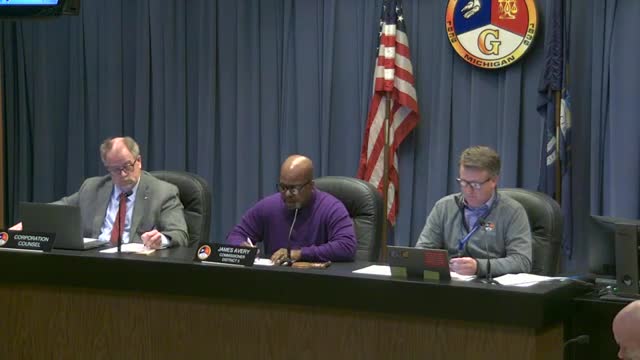
Genesee County approves $3 million state water-assistance grant and several public-health awards
Summary
The county Human Services Committee approved a $3 million Michigan Department of Health and Human Services grant for water bill assistance and accepted several smaller health grants for breastfeeding support, substance-use work and maternal-child services.
Genesee County's Human Services Committee approved a $3 million grant from the Michigan Department of Health and Human Services on a unanimous vote to help residents pay past-due water bills.
The grant will be administered through the county's existing assistance hotline and intake process. Pamela Coleman, director of GCARD, told commissioners that "the utility bill has to be in the prospective client's name, [and] has to be in arrearage." Coleman said the program aims to be a "one-and-done" process where applicants provide income documentation and the county forwards payment to the municipality holding the water account.
The committee also approved a $197,767 grant that requires a county match to continue the county's breastfeeding peer-counseling program, a $140,000 award from the Michigan Health Endowment Fund for a DAT (drug-assisted treatment) initiative, and a $491,816 Health Resources and Services Administration grant to support the county's Healthy Start maternal–child program. All grants were moved and supported by committee members and carried without recorded opposition.
Coleman said payments under the water-assistance grant will generally be capped at $3,000 per household and that if an applicant's bill exceeds the cap they must either pay the remainder themselves or show another agency has committed to cover the difference. Residents will apply through the county hotline and will be notified through the county's social media channels; commissioners asked that those notices be shared with all commissioners so they can amplify outreach in their districts.
The approvals are routine grant-acceptance actions that fund existing county programs. The committee did not change eligibility criteria; Coleman said the county will follow the usual intake and documentation process used for prior water-assistance programs.
County officials said the funds will be routed to the accounts listed in the grant materials and implementation will be coordinated by GCARD and the health department. For residents seeking assistance, the county recommends calling the county hotline for intake instructions and required documents.
For now, commissioners focused on outreach and logistics rather than policy changes; one commissioner suggested sharing program announcement materials with the full board and local elected officials to maximize awareness.