Get Full Government Meeting Transcripts, Videos, & Alerts Forever!
Get email alerts on the Aging Services topic
No spam. Unsubscribe anytime.
Mayor’s office marks one year, council presses for faster housing fixes for older adults
Summary
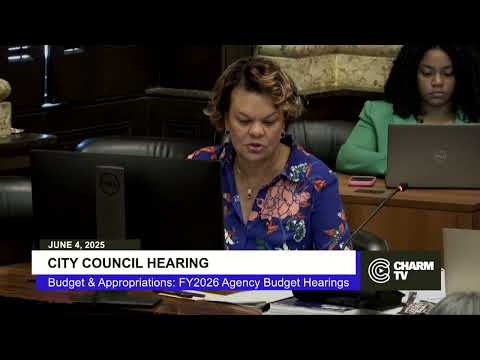
At a Baltimore City Council meeting, Director Andoria Harmon, director of the Mayor’s Office of Older Adult Affairs and Advocacy, summarized the office’s first year of work and outlined plans to develop an age-friendly strategic plan while council members pressed for faster action on housing and service backlogs affecting older residents.
At a Baltimore City Council meeting, Director Andoria Harmon, director of the Mayor’s Office of Older Adult Affairs and Advocacy, summarized the office’s first year of work and outlined plans to develop an age-friendly strategic plan while council members pressed for faster action on housing and service backlogs affecting older residents.
Harmon said the office — which she called “one year of impact” — has embedded staff in communities, launched lunch-and-learn events at senior housing and churches, and taken over staffing for the Mayor’s Commission on Aging and Retirement and Empowerment from the Baltimore City Health Department’s Division of Aging and Community Support. “This office is celebrating an anniversary 1 year,” Harmon said. “The mayor's office of older adult affairs and advocacy has established a community presence.”
The presentation matters because council members said systemic delays in housing and home-repair programs leave older residents waiting for services they need to remain safe in their homes. Councilwoman Ramos and other members asked the office to lead advocacy for faster intake, assessments and contracting for the HUBS and LIGHT programs, which provide weatherization and home repairs. “We need your office and you to be standing up and screaming very loudly that this needs to change,” Ramos said.
Harmon described concrete outreach and data practices the office uses: she said MOAA has three staff members, maintains a contact list of about 1,000 people built from attendees and clients, and collected feedback using surveys at events. She said MOAA aims to get rapid responses to constituent issues, “often within 24 to 48 hours,” and that the office held a mayoral older adult seminar this year that registered more than 458 older adults.
On housing, Harmon said the age-friendly plan her office is drafting will include housing, affordability and accessibility measures and that the office is building partnerships with the Housing Authority of Baltimore City (HABC) and other agencies to learn why problems occur before proposing solutions. She noted recurring building problems reported by residents — nonworking elevators, buildings without evac chairs, and fears of retaliation by property managers when residents complain — and said the office is collecting that input to shape policy and outreach.
Council members added operational details and requests. Vice President Middleton and Councilman Bullock urged the office to track performance measures and publish data on how many residents are assisted, how quickly services are delivered and where bottlenecks occur. Harmon said the office collects intake and outreach data in spreadsheets and has defined key performance measures for 2025 and offered to provide those metrics to council offices.
On the HUBS and LIGHT programs, council members and Harmon described two separate delay points: long waits for initial intake and long waits for assessments and contractor visits after intake is accepted. Harmon said some callers report that they were notified their applications were accepted but then waited for an in-home assessment; others report long intake queues. Council members also said contractor shortages and delayed payments from agencies slow repairs and weatherization work.
Council President Cohen said the council expects a strategic plan and interagency coordination, including leveraging social work practicum programs at University of Maryland and Morgan State to expand case management capacity. Deputy Mayor J. D. Merrill Lynch recommended a separate pre-hearing meeting with the Department of Housing and Community Development (DHCD) to begin solving the intake and payment problems.
No formal vote or ordinance resulted from the presentation. Council members said they will hold a hearing on the HUBS and LIGHT programs and seek an interagency performance measure and a formal liaison between DHCD and the Mayor’s Office of Older Adult Affairs and Advocacy. Harmon said she is building a framework and aims to have a draft age-friendly plan to share with the council next year.
Next steps outlined at the meeting include a pre-hearing meeting with DHCD, a full council hearing on HUBS and LIGHT, and requested reporting of the office’s defined performance measures and outreach metrics to council offices.