Get Full Government Meeting Transcripts, Videos, & Alerts Forever!
Get email alerts on the Public Safety Firestations topic
No spam. Unsubscribe anytime.
Retired Fall River fire chief urges council to press state to use cannabis revenue for station repairs
Summary
Retired Chief John D. Lynch urged the council during public comment to ask local legislators to support legislation that would use state cannabis tax revenue to fund fire-station construction and repairs; he also emphasized staffing and apparatus replacement as higher priorities than buildings alone.
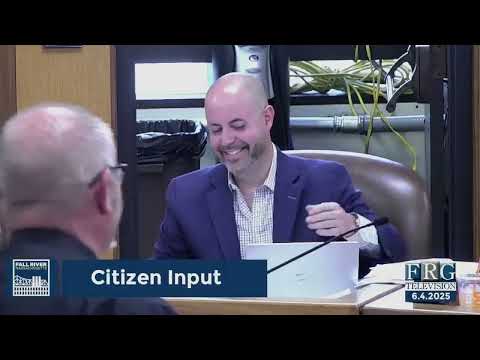
John D. Lynch, a retired Fall River firefighter, used his allotted public-comment time at the June 4 meeting to urge the city council to press regional legislators to back a proposed state fund for fire station repairs and construction. Lynch cited an initiative being advocated on Beacon Hill by a retired Westwood chief and the Fire Chiefs Association of Massachusetts that would create a station‑construction/repair fund financed in part by cannabis tax revenue.
"What about all this cannabis money we have? Why can't we use some of that cannabis money to create a fund...to help all these cities and towns that have stations that are in deplorable conditions?" Lynch asked, urging the council to "contact our local legislators" and back the effort.
Lynch stressed that while station repairs are urgent, apparatus replacement and staffing are more critical. "Stations is dire and need and not as important as apparatus replacement. And most important of all, adequate staffing," he said, adding that equipment and buildings are ineffective without sufficient personnel on the front lines.
The council temporarily extended Lynch's public‑comment time by unanimous voice vote to allow him to finish; he concluded by imploring the council to prioritize staffing and to seek legislative help for funding.
Why this matters: Lynch combined a near-term funding proposal (use of cannabis revenue for building funds) with a staffing warning that underscores the operational needs behind capital investments: councilors may need to weigh building repairs against recurring staffing and apparatus-replacement budgets.
Ending: Lynch asked councilors to follow up with state representatives and to continue treating public-safety funding as a top priority.