Get Full Government Meeting Transcripts, Videos, & Alerts Forever!
Get email alerts on the Zoning And Landscape topic
No spam. Unsubscribe anytime.
Sloan Motors, Planning Board disagree over landscaping, lighting; board requires native species and photometric confirmation
Summary
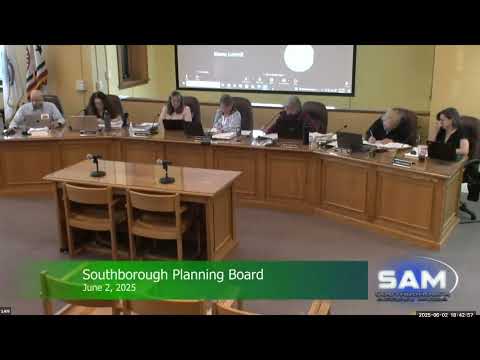
The Planning Board on June 2 told Sloan Motors it must replace removed landscaping with straight native species and provide photometric/hardscape calculations for lighting after the applicant sought to substitute non-native shrubs and trees following facade work.
At a contentious June 2 discussion, representatives for Sloan Motors (212/218 Turnpike Road) presented proposed landscaping and lighting changes tied to recent façade work. The Planning Board reviewed the requested substitutions and required the applicant to submit a revised planting plan using native species and confirm lighting calculations to meet Town outdoor-illumination requirements.
The property owner, Scott Barry (Sloan Motors sales president), told the board he removed several shrubs and trees to support facade work and sought to replace them with species his landscaper recommended—specifically inkberry shrubs (Ilex species) in front of the showroom instead of the previously proposed mountain laurel, and columnar/fastigiate trees rather than the gray birch that had been suggested. Barry said he preferred plants that maintain foliage to the ground and present a fuller hedge for customer visibility in the driveway.
Planning staff reminded the applicant that the August 2024 agreement to avoid a full site-plan modification required replacement plantings to be “straight native species.” Planner Karina told the board that the August approvals were conditional on replacing non-native species with native species and that the town planner could generally approve small species substitutions but this request exceeded that scope because it introduced new landscaping in a different area and removed previously approved plants.
Board members expressed concern about non-native species and reaffirmed the town’s landscaping standards. “I can’t approve that because it’s not native,” a member said when the owner proposed English oak replacements for non-native varieties. Members also raised the town’s outdoor lighting standards: staff requested photometric and hardscape calculations showing the lumen outputs of existing and proposed fixtures to confirm compliance with the Town’s correlated color temperature (CCT) and hardscape limits.
The discussion became heated at one point; a board member asked the applicant to apologize to staff for a prior exchange during a separate meeting. The applicant apologized to Town Planner Karina in the meeting. Board members said they would support reasonable native replacements that match the town’s street-tree and native-plant guidance and recommended the applicant and his landscaper consult the Native Plant Trust/GoBotany resources and the board’s street-tree guidelines.
The board gave procedural direction: provide a revised landscape plan showing native-species substitutions (inkberries across the showroom, approved juniper replacements where previously agreed, and a native cherry or equivalent for a small back corner), and submit the lighting contractor’s photometric calculations and hardscape-lumen documentation. Planning staff agreed to vet the proposed list and, if the substitutions are native and within the street-tree guidance, sign off administratively so the applicant does not need to return for a full modification hearing.
The board also asked the applicant to provide written confirmation from easement holders where an existing easement footprint was to be reduced or modified. The board concluded the conversation with an agreement on the path forward: revise plantings to native species, provide the required lighting documentation, and submit an updated landscape plan for administrative review.