Get Full Government Meeting Transcripts, Videos, & Alerts Forever!
Get email alerts on the Technical Assistance And Grants topic
No spam. Unsubscribe anytime.
OTA and TURI promote free confidential assistance, training and PFAS alternatives grants
Summary
Speakers from the Massachusetts Office of Technical Assistance and the Toxics Use Reduction Institute reviewed free confidential technical assistance, training courses and grant-supported alternatives projects to help Massachusetts businesses reduce toxics, including PFAS.
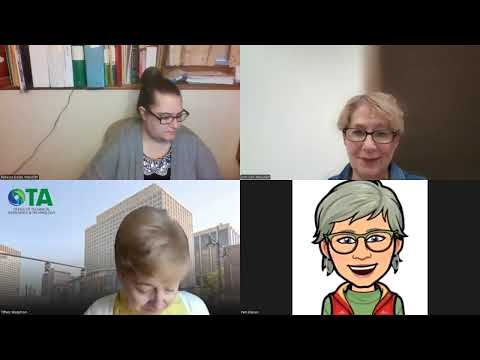
The Massachusetts Office of Technical Assistance (OTA) and the Toxics Use Reduction Institute (TURI) told webinar attendees they provide free, confidential technical assistance, training and grants to help businesses reduce toxic chemical use and identify safer alternatives.
Tiffany Skogstrom, director of OTA, said OTA is a nonregulatory program created by the Toxics Use Reduction Act to provide confidential, free assistance. "We have conducted thousands of site visits at thousands of facilities, reducing millions of pounds of toxic chemicals and saving companies millions of dollars in operating costs," she said.
Skogstrom said OTA’s staff include chemists, engineers and public‑health professionals who perform on‑site and remote assistance, produce tailored reports after visits and follow up until the company is satisfied. OTA also offers tabletop exercises on chemical safety and climate‑change resiliency; Skogstrom announced exercises on June 24 at Lawrence Heritage State Park and June 25 at Holyoke Community College.
Heather Tenney of TURI described TURI’s education, training and research programs that support TUR planners and industry transitions away from hazardous substances. TURI manages the science advisory process for changes to the TURA chemical list and performs alternatives assessments, university grant work and laboratory services; Tenney noted ongoing projects to find PFAS‑free fabrics for automotive applications and alternatives to halogenated solvents and food‑packaging PFAS.
TURI and OTA representatives described existing grants and demonstration projects: a successful Transene microelectronics grant produced a PFAS alternative that was cheaper and more marketable; a research grant with Hart’s Corporation is seeking PFAS‑free fabric treatments; TURI secured a particle‑induced gamma emission instrument at UMass Lowell to screen consumer products for PFAS with partners including Clean Water Fund and the Silent Spring Institute. Community grants include work with the Berkshire Regional Planning Commission on plastics and microplastic food impacts and a project with a Brazilian women’s group on safer cleaning products.
Both agencies encouraged businesses to contact them for assistance, offered surveys and supplier‑notification letter templates to help identify PFAS in incoming products, and noted that OTA and TURI coordinate with other states’ technical assistance providers to share best practices. TURI said the TUR planner course will start in August with remote modules and in‑person sessions into October, and that webinars on environmental justice and math skills for TUR reporting are scheduled in early June and mid‑June.
The agencies provided contact points and social media links and asked attendees to sign up for newsletters and training announcements.