Get Full Government Meeting Transcripts, Videos, & Alerts Forever!
Get email alerts on the Housing Policy topic
No spam. Unsubscribe anytime.
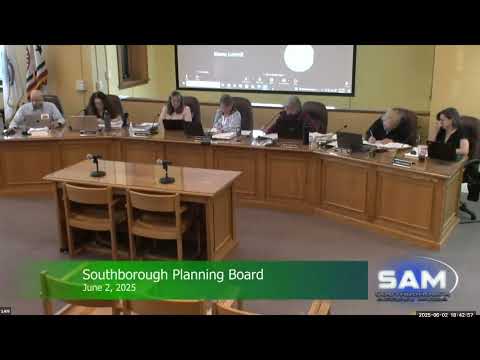
Planning Board favors administrative cleanup of ADU bylaw; pushes major rewrite to later
Summary
After the accessory dwelling unit (ADU) bylaw failed at town meeting, the Planning Board recommended making an immediate administrative update to align Town code with state law and to clarify terminology and permitting steps, postponing a broader rewrite for later.
The Southborough Planning Board on June 2 discussed next steps for an accessory dwelling unit (ADU) bylaw that voters rejected at Town Meeting and agreed to prioritize an “administrative cleanup” to ensure the municipal code aligns with state law and uses consistent definitions.
Planning staff and board members said the immediate work should include adding a defined term for “accessory dwelling unit,” replacing the phrase “accessory apartment” in the code, aligning special-permit language with ADU terminology, and adding a by-right allowance where the code currently only references special permits.
“My feeling is to just leave everything the same. Just update the code so it complies with state law,” Planning Board Chair Mimi Littrell said, recommending incremental changes first. Several board members supported that approach, saying the code needs clearer, consistent definitions and that voters’ concerns at Town Meeting appeared to center on interpretation and the two-step review process for site plan review and the Zoning Board of Appeals.
Board discussion referenced a previously proposed bylaw that would have shifted some review authority to the Planning Board so proponents could complete abbreviated site-plan review and special-permit approval before going to the ZBA; that proposal generated debate at Town Meeting. Board members said they will first adopt language to ensure a by-right ADU use is present in the code and that the special-permit language matches the new definition, then consider returning with a more substantive rewrite at a later meeting.
Members also discussed short-term rental language: under current code short-term rentals remain allowed, and the board noted that prohibiting short-term rentals was intended to preserve housing but was not passed by voters. Board members signaled preference to remove an anomalous special-permit reference to the Industrial Park District that staff will draft language to correct.
Planning staff said they will prepare a draft administrative amendment and circulate it to the board for review; a fuller rewrite—including whether site-plan review should be consolidated with the Planning Board—could follow after the board gauges public and stakeholder reaction.