Get Full Government Meeting Transcripts, Videos, & Alerts Forever!
Get email alerts on the Wastewater Treatment topic
No spam. Unsubscribe anytime.
City reviews response after industrial sanitizer compounds trigger fish kill, reseeding at wastewater plant
Summary
The City and its contractor, the Stover Group, briefed commissioners on a mid‑May wastewater treatment upset that officials say was caused by strong sanitizer compounds entering the sewer system and led to elevated effluent ammonia and a reported fish kill in Skeleton Creek.
The City discussed a wastewater‑treatment upset that led to elevated ammonia in the plant effluent and a reported fish kill in Skeleton Creek after strong sanitizer compounds entered the sewer system.
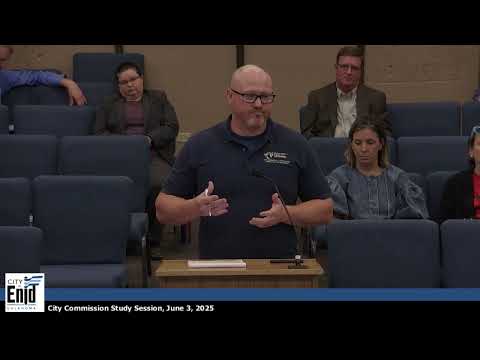
At a study session, Dr. Ross Stover, vice president of the Stover Group, said operators first saw soapy foam on the influent May 20 and then rising effluent ammonia concentrations. "We're getting there," Stover said, describing steps taken to stop the discharge and restore biological treatment.
Stover told the commission lab analyses showed very high concentrations of cationic surfactants — mainly quaternary amines — at levels he said can inhibit treatment at 3–5 milligrams per liter. "We saw it anywhere from approximately 5 and a half to almost 13 milligrams per liter on the influent coming in," he said, and biomass samples showed about 25 mg/L adsorbed to the solids. Bacterial speciation testing, Stover said, showed the plant's nitrifiers were "almost completely wiped out," leaving nitrification near zero and effluent ammonia as high as nearly 50 mg/L before recovery measures began to work.
City staff and the Stover Group said they notified the state Department of Environmental Quality and diverted flow from the plant to an older storm pond while monitoring water quality. Stover said the plant used offline basins for additional storage and later blended tap water (about 2.75 million gallons) into an empty basin to dilute concentrations and protect biomass while the system recovered.
To restore nitrification more quickly, operators purchased a commercial nitrifier seed culture rather than importing seed sludge from another municipality; Stover reported staff added the product on a Friday near the end of May and saw effluent ammonia begin to fall, with a grab sample before his arrival at the meeting measuring 9.7 mg/L. He said biochemical oxygen demand and total suspended solids were near normal.
City environmental staffer Stephanie Cervantes described sampling at lift stations and collection points and said staff had requested safety data sheets from local industrial customers that commonly use the sanitizers. City staff and Stover said the available analytical reports identify the chemicals by specific chemical names, which could help trace sources.
Commissioners asked whether the plant malfunctioned; Stover said the data indicate an influent contamination rather than mechanical failure. Commissioners and staff discussed using the city’s pretreatment authority and ordinances to prevent future discharges and noted a planned local limits study funded in the coming fiscal year to recommend stricter discharge limits.
Staff estimated the nitrifier reseed cost about $8,400. The city and Stover said they will continue targeted sampling, share lab data with DEQ, and pursue identification of any responsible industrial source before pursuing enforcement measures.
The commission did not take formal action at the session; staff described ongoing sampling, laboratory analysis, and steps to revise procedures and local limits to reduce future risk.