Get Full Government Meeting Transcripts, Videos, & Alerts Forever!
Get email alerts on the Gun Violence Intervention topic
No spam. Unsubscribe anytime.
Springfield initiative wins $1.6 million federal grant to launch community violence intervention
Summary
City commissioners heard a presentation on a community-based violence intervention (CVI) plan funded by a $1.6 million Bureau of Justice Assistance grant, with implementation planned over the next 18 months and a call for community partners to help reach youth in three high-incident census tracts.
Springfield commissioners heard a presentation on a federally funded community violence intervention initiative that secured $1.6 million to support research, planning and initial activities aimed at reducing gun violence.
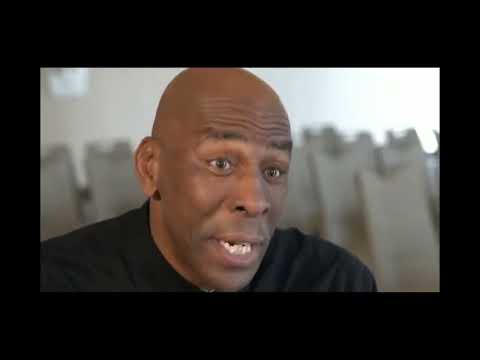
The presentation, delivered by Caleb Perkins, the gun violence prevention coordinator for the initiative, laid out a data-driven plan focused on youth and on concentrated neighborhoods: “As a result of those efforts, the group was able to secure $1,600,000 in federal funds,” Perkins told the commission.
The money comes from the U.S. Department of Justice Bureau of Justice Assistance Community-Based Violence Intervention and Prevention Initiative (CVIPI) grant program, awarded to a coalition of local stakeholders. Perkins said the Opportunity Industrialization Center (OIC) of Clark County was selected to submit the application and act as fiscal agent for the funded effort.
Perkins summarized the initiative’s origins as a voluntary coalition of community leaders and agencies — including Springfield Police Division, Springfield City Schools, the Springfield Foundation, the Clark County Juvenile Court, the Clark County Combined Health District, the Mental Health and Recovery Board and the Springfield NAACP chapter — who decided to pursue the DOJ solicitation. The group partnered with Case Western Reserve University to conduct a community assessment and analyze criminal and public-safety data.
The assessment found firearm offenders aged 14 to 24 accounted for more than twice the number of arrests compared with the next-highest offender cohort, Perkins said. He also presented maps showing concentrations of shots-fired calls and firearm-related arrests concentrated in Census Tracts 3, 12 and 13 during the 2020–2024 period. “These are the areas where we need to focus our efforts,” Perkins said.
Perkins said the assessment identified existing protective programs and gaps where evidence-informed practices should be strengthened. The initiative’s planned activities include capacity building for community organizations, trauma-informed practices and a gun violence reduction plan the group must develop under the grant. He said implementation of strategies identified in the plan will occur over the next year and a half.
Perkins invited residents and community organizations to join the effort. “Anyone who wants to be a part of this initiative can reach out directly to me,” he said, giving an email contact for coordination and volunteer interest.
Commissioners thanked Perkins and OIC for assembling stakeholders and securing the grant, and they asked how residents and existing nonprofits could get involved. Perkins said the initiative has identified potential partner organizations and is assessing collaborators as it moves toward implementation.
The presentation did not include formal commission actions or votes. Commissioners voiced support and asked procedural questions; no motion or directive for city staff was recorded during the work session portion of the meeting.
The initiative’s next steps, as described by Perkins, are to implement the gun violence reduction plan, expand strengths of existing programs, and assist local organizations in building capacity to reach at-risk youth and provide alternative supports to violence. Perkins emphasized the need for a “collective and collaborative effort” to make a measurable impact on gun violence in Springfield.