Get Full Government Meeting Transcripts, Videos, & Alerts Forever!
Get email alerts on the Dark Sky Lighting topic
No spam. Unsubscribe anytime.
Rangeley meeting reviews dark‑sky lighting ordinance; sends applicability clause to town attorney
Summary
Local officials reviewed proposed revisions to a lighting ordinance intended to meet Dark Sky guidance, debated whether requirements can be applied to existing fixtures, and agreed to send the ordinance's applicability clause to the town attorney for legal review ahead of a planned special town meeting in September.
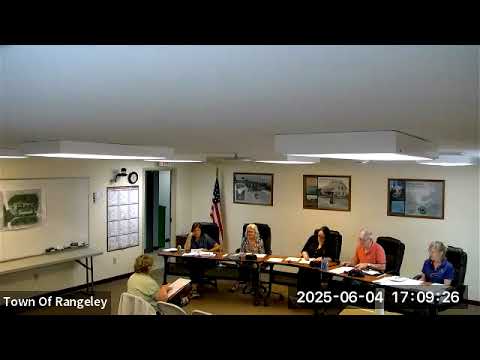
Members at a Rangeley meeting reviewed proposed revisions to the town's outdoor lighting ordinance, focusing on how retrofitting, fixture height and timing rules would apply to existing lights and commercial properties as the town prepares for a special town meeting in September.
The discussion centered on whether the ordinance could require retrofit of existing fixtures, a five‑year compliance period recommended in draft language, and a number of practical exemptions and definitions. Participants repeatedly asked for a legal opinion on the applicability clause before the group takes further action.
The draft ordinance under review incorporates suggested language marked in red from outside examples and some Dark Sky guidance. Attendees raised technical and practical concerns: comparisons of lumens to incandescent wattage (one attendee noted 1,600 lumens is similar to a 100‑watt incandescent); variability among LED products that makes a simple wattage comparison unreliable; and that shielding or other fixes may require full fixture replacement rather than a simple add‑on. Participants said those implementation costs and technical limits need clarification before any retroactive requirements are adopted.
Commercial fixtures were a recurring focus. Attendees identified the IGA store lights and a bowling‑alley facility as examples where tall parking‑lot poles (discussants estimated some fixtures at roughly 25 feet) or building‑mounted floodlights currently produce significant light spill. The draft includes a prohibition on floodlights or spotlights fixed to buildings in one section, and the group asked for clarity on how that prohibition would apply to existing business lighting and to security or 24‑hour operations such as inns.
The draft sets different maximum heights in different sections (for example, parking‑lot lights referenced at 14 feet, recreational pole lighting at 18 feet, and other items at 25 feet). Several participants called the differences inconsistent and asked staff to harmonize heights or explain the rationale. The draft also includes an after‑hours curfew recommendation (participants discussed 10:00 p.m. as a commonly suggested time), a window‑signage exception for illuminated interior signs, and a note that only the United States and Maine state flags may be illuminated.
On procedure, attendees agreed to pause substantive action pending a legal review of the applicability clause. "Leave until legal review," a member said during the session; others concurred that many issues hinge on whether the town can legally require retrofit of existing fixtures and on what schedule. The chair noted the draft has already been reviewed by the planning board and that the next step is attorney review; if legal guidance is received the committee expects to move the ordinance toward the special town meeting in September.
Two formal procedural actions occurred during the meeting: members voted unanimously to accept the minutes (motion by Carolyn; second by Scott) and later voted unanimously to adjourn (motion by Scott; second by Val). The committee also tentatively scheduled a follow‑up meeting for June 18 (subject to attorney response) to continue work on the ordinance.
Next steps identified by participants: send the applicability paragraph (section 0.2 in the draft) to the town attorney for a written opinion; staff to inventory specific fixtures cited (IGA lights, bowling alley, park lighting) and clarify which fixtures are on dusk‑to‑dawn circuits; and return with harmonized height limits and clearer language about retrofits versus new or replacement lighting. Planning board review was noted as already completed and attorney feedback was described as the gating item before the ordinance can be finalized for the special town meeting in September.