Get Full Government Meeting Transcripts, Videos, & Alerts Forever!
Get email alerts on the Personnel Management topic
No spam. Unsubscribe anytime.
Commissioners press HR on reclassifications and tracking FTEs for 2026 budget
Summary
At the June 3 meeting commissioners questioned human resources about recent reclassifications and step increases, urging clearer linkage between job classifications, funded FTEs and the 2026 personnel budget. HR described provisions in the county's new-hire policy and the ability to budget personnel by FTE in the new Tyler system.
Commissioners asked for clearer documentation tying individual job titles and reclassifications to funded full-time-equivalent positions as the county prepares the 2026 personnel budget.
Commissioner (first name not given) raised several examples in the treasurer’s office where a new hire moved from "admin support" to "admin assistant" or from "tax and title assistant" to "accountant 1," asking HR to identify whether such changes are step increases, reclassifications or promotions and to show the resulting step on the wage scale. "If they're holding the same position, I would list it as a step increase," the commissioner said, pressing for a clearer display of step changes on personnel lists.
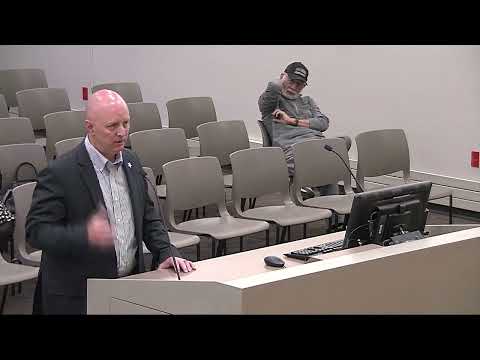
Carol Bancroft, Pennington County HR director, explained the county's new-hire policy allows a new employee to progress up to step 12 within the first 12 months once required training is completed. Bancroft said some of the items on the personnel list were the result of that policy and additional reclassifications or promotions handled at the department level.
Why it matters: Commissioners said they need the linkage between job descriptions and funded FTEs to produce a clearer personnel budget. One commissioner recommended tying each job description to a specific number of funded FTEs per department and using the Tyler personnel module to flag changes that would exceed authorized FTEs.
Details and next steps: Bancroft told the board that under current practice departments track and allocate FTEs internally but that staff could adopt a more centralized approach tying particular job classifications to funded FTE counts to avoid unplanned salary expense creep. Commissioners asked HR and department heads to present a personnel-by-FTE view as part of the 2026 budget process so the board has a clearer picture of funded positions, step movement and potential impacts on personnel costs.
Formal action: The commission approved the personnel consent item at the meeting; commissioners followed the standard motion-and-second consent process for the consent agenda item that included personnel changes.