Get Full Government Meeting Transcripts, Videos, & Alerts Forever!
Get email alerts on the Parole Reform topic
No spam. Unsubscribe anytime.
Lawmakers hear mixed views on bringing parole‑style review back into Washington sentencing
Summary
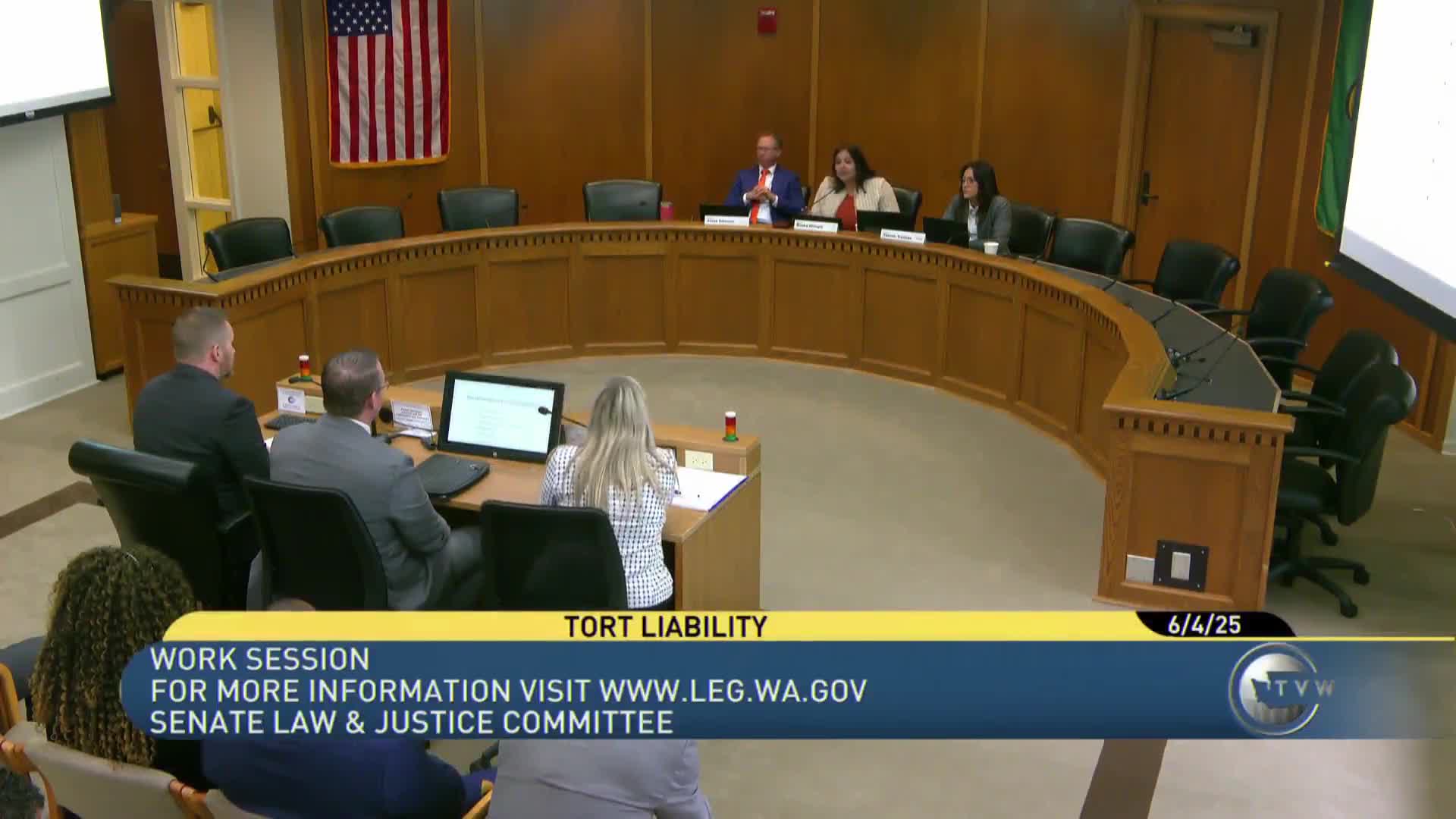
At a June 4 Law & Justice Committee work session, a multi‑panel discussion covered the history of parole in Washington, options for integrating parole with the state’s sentencing grid and competing views from judges, prosecutors, defenders and formerly incarcerated advocates about equity, public safety and implementation.
The Law & Justice Committee on June 4 heard panels weighing whether and how a parole‑style review could be reintroduced alongside Washington’s sentencing guidelines.
"A parole system creates an opportunity to take into account rehabilitative progress, personal growth, community support," Judge Veronica Galvan, co‑chair of the Minority and Justice Commission and King County Superior Court juvenile chief, told the committee.
Why it matters: parole or a parole‑like mechanism would reshape when and how people serving long sentences become eligible for supervised release and could affect prison populations, state budgets, racial disproportionality and reentry services.
History and options. Carrie Ann Yetzer, coordinator of the Sentencing Guidelines Commission, and Dr. Lauren Knoth Petersen of the Public Safety Policy and Research Center reviewed the state’s move from indeterminate to determinate sentencing in the 1980s and described three ways a guidelines grid can interact with parole:
- The grid could set minimums that trigger parole eligibility (a “determinant plus” model), - The grid could set maximums and make eligibility a function of a percent served, or - The grid could show typical time served that parole reviewers use as a reference point.
Dr. Petersen noted that other states combine guidelines and parole in different ways and that comparative study is complex because of other structural differences among states.
Competing perspectives. Judges and defense advocates urged a data‑driven, transparent system with judicial review and safeguards for racial equity. Judge Galvan said data collection and “an avenue for meaningful access that is not controlled by a party in interest” are essential. Judge Cindy Larson, president of the Superior Court Judges Association, said the association reached consensus that a centralized review board could reduce geographic disparities in resentencing cases.
Prosecutors and some municipal leaders warned parole should be built with public safety and supervision resources front‑loaded. Benton County Prosecutor Eric Eisinger said any parole system “should primarily further the interests of the community” and stressed reentry resources and meaningful supervision for people released after long sentences. Russell Brown, executive director of the Washington Association of Prosecuting Attorneys, said the state has parole‑like features already and urged incremental changes (for example, expanding determinant‑plus eligibility) instead of a wholesale return to the old indeterminate model.
Defense and community voices argued for multiple relief paths and broader access. Cindy Arens Ellsbury of the Washington Defender Association said clemency and current boards provide only narrow relief and noted that ‘‘of the 13,000 people we currently house, only 2,300 are considered part of the ISRB population.” Formerly incarcerated presenters described programs and peer supports inside and outside prisons that they said make release more successful.
Criminal Sentencing Task Force recommendations. Committee staff summarized task‑force options that touched on parole: a proposal to convert the state’s persistent‑offender (three‑strikes) framework to a determinant‑plus model, review of the most‑serious‑offense list, and a proposal for a second‑chance review process for those who have served lengthy terms. None of those three items achieved full task‑force consensus, and members urged further study and evaluation.
Ending: lawmakers left the session with no immediate policy decisions; witnesses and committee staff identified research and design questions (how to set eligibility percentages, how to build safeguards to limit geographic and racial disparities, and what supervision and reentry funding would be required) that would need resolution before adopting any change.