Get Full Government Meeting Transcripts, Videos, & Alerts Forever!
Get email alerts on the Tort Liability topic
No spam. Unsubscribe anytime.
Committee hears state tort payouts rising as child‑welfare and corrections claims surge
Summary
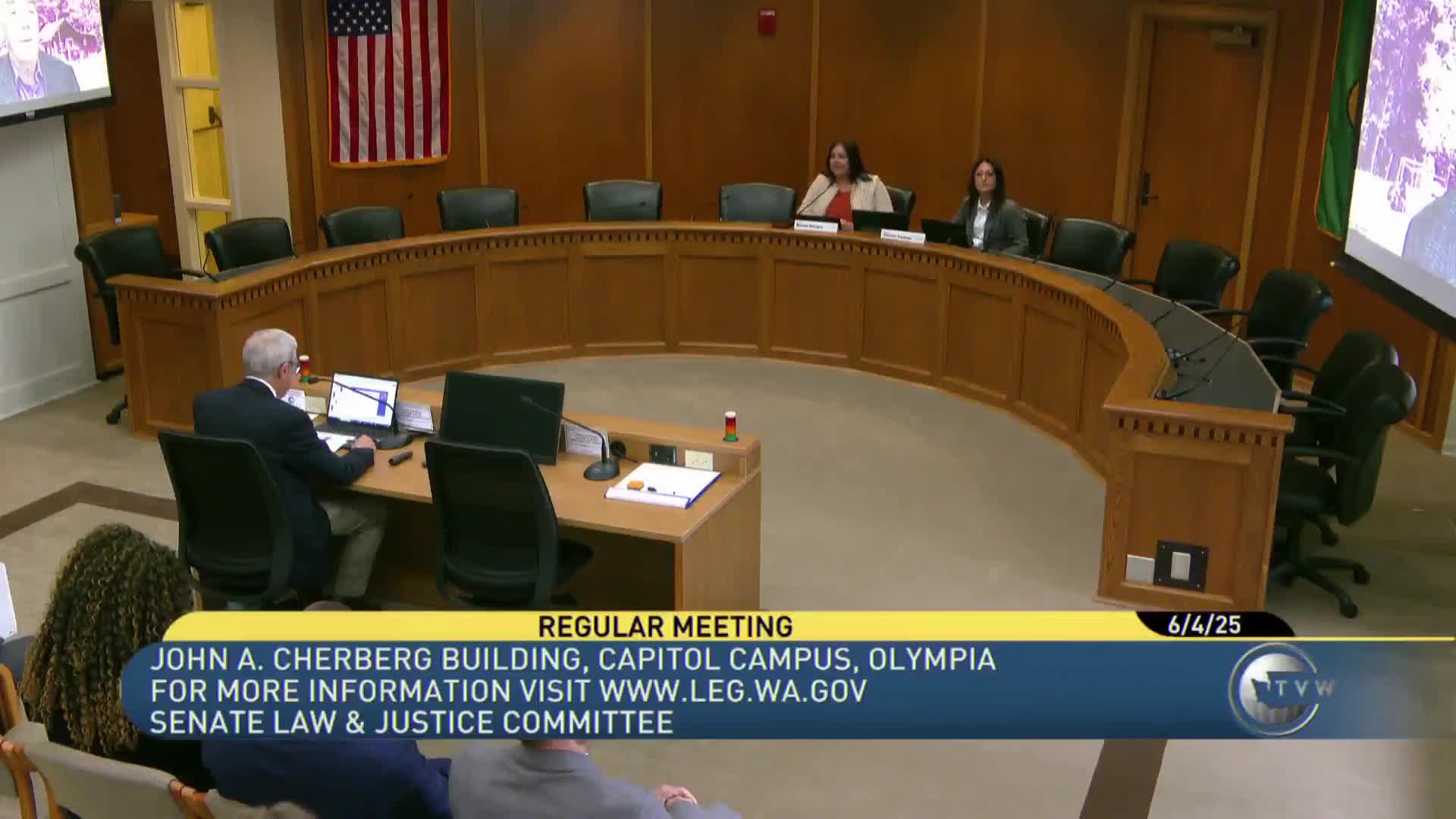
Staff and agency witnesses told the Law & Justice Committee on June 4 that Washington is seeing large increases in tort claims and payouts, primarily tied to child‑welfare and corrections cases.
Staff and agency witnesses told the Law & Justice Committee on June 4 that Washington is seeing large increases in tort claims and payouts, primarily tied to child‑welfare and corrections cases.
“Tort payouts are increasing,” William Bridges, committee staff, said in opening the discussion on the state’s tort liability profile. He cited data from the Office of Risk Management showing the Department of Children, Youth and Families (DCYF), the Department of Social and Health Services (DSHS) and the Department of Corrections (DOC) as top drivers of claims.
Why it matters: rising claims affect the state budget and agency operations and may prompt additional legislative fixes. Committee witnesses and agency officials described how case law and recent litigation trends, changes to childhood abuse statutes and concentrated waves of lawsuits are increasing both the number and cost of claims.
State staff and outside counsel described the pattern. Scott Barber, chief of the Torts Division at the Attorney General’s Office, said, “the largest single driver over the last decade or so has been lawsuits and claims against DSHS and then DCYF.” He and other witnesses pointed to the interaction of statutes, discovery rules and court decisions as key drivers.
Several legal developments and litigation trends were singled out:
- Statutes and case law. Witnesses cited Washington’s broad waiver of sovereign immunity, statutory duties for mandatory reporters (RCW 26.44.030), and recent changes to childhood sexual‑abuse limitation rules. Bridges summarized the legal picture: waivers, statute‑of‑limitations changes, damages rules and case law all affect liability exposure.
- Court decisions. Attorneys referenced Tyner v. DSHS and the HBH line of cases as expanding duties tied to investigations and foster‑care placements; MR and Wolf were cited for expanding how continuing harms or newly discovered injuries can revive claims.
- Concentrated claim filings. Scott Barber and others told the committee that new theories and expanded application of HBH liability are producing waves of claims. Barber said a single law firm has submitted roughly 800 claims related to abuse in Juvenile Rehabilitation Administration (JRA) facilities; those filings and related lawsuits are a major portion of recent increases.
Agencies described operational impacts and options. Allison Kreutzinger of DCYF told the committee that, “as of May 31 … we are already at 1,300 individual claims for the department.” She emphasized that most recently filed claims involve incidents that occurred years or decades earlier and that payouts typically lag filings by 18–36 months.
Jason Howell, chief risk officer for DSHS, said adult‑abuse and employment claims now dominate DSHS payouts in some years and that the agency is frequently a co‑defendant with third‑party providers. “We’re sort of the deep‑pocketed defendant,” Howell said, describing why counties, contractors and providers often trigger state involvement in settlements and why attorney‑fee exposure can increase overall costs.
Michael Pedersen, risk management at DOC, described a separate liability profile for the department—negligent supervision claims, medical negligence, and security failures. He noted that negligent‑supervision payouts are uncommon but large when they occur and that modernizing medical records and improving staffing and treatment (including expansion of medication‑assisted treatment and an electronic health record) are among the department’s priorities to reduce risk.
Outside counsel and plaintiff‑side lawyers urged additional remedies and funding changes. Daryl Cochran, representing the Washington State Association for Justice, said courts and journalists historically relied on tort cases to uncover systemic harms and urged stronger internal risk‑management capacity at the Attorney General’s Office. Cochran argued that under‑resourced in‑house trial lawyers had pushed the state to pay larger special‑assistant fees and to accept bigger verdicts: “We should be funding the torts division trial lawyers group so that they can staff these cases properly,” he said.
Possible responses discussed by witnesses included bolstering the Attorney General’s torts division, restoring or expanding voluntary early‑resolution programs, investing in agency staffing and records (electronic health records), and targeted funding for treatment and supervision programs that could prevent future claims.
Ending: committee members asked clarifying questions but did not take votes. Witnesses left the committee with the same inventory of options: fund risk management and defense capacity, consider statutory clarifications about immunity and damages, and invest in prevention (staffing, treatment, records modernization) to reduce future liability. No formal policy actions were taken at the session.