Get Full Government Meeting Transcripts, Videos, & Alerts Forever!
Get email alerts on the Wetlands Enforcement topic
No spam. Unsubscribe anytime.
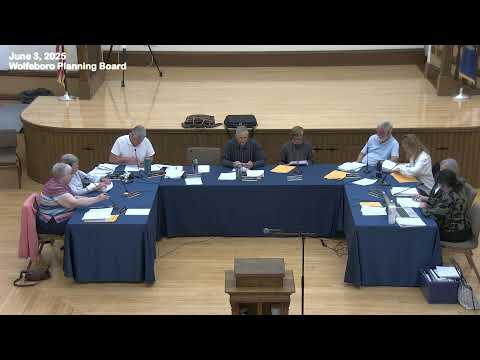
Planning board splits decision on patio in wetland buffer — approves deck and stairs but not pervious patio
Summary
After a site visit uncovered filled material within the wetland buffer, the board declined to approve a proposed pervious patio in the wetland buffer at 9 Christopher Court but approved the deck-and-stairs element so homeowners can access their yard; the board continued discussion to examine ordinance interpretation and procedures.
The Wolfeboro Planning Board voted to allow a deck and stairs at 9 Christopher Court but withheld approval for a proposed pervious patio inside the wetland buffer, after a site visit revealed grading and fill inside the buffer that the board said required further review.
D and M Homes (applicant Sean Dunn) sought a special-use permit to construct a 289-square-foot pervious patio and related small impervious impacts within the required wetland setback for a lot created in 1987. The applicant’s consultant described a typical pervious-paver construction — stone subbase, filter fabric and pea-stone infill — and said the owner intends routine maintenance. The board and staff raised concerns about long‑term permeability and inspection/maintenance responsibility if a future owner did not maintain the system.
More significant to the board was evidence from an on-site inspection that prior grading and fill had been placed into the wetland buffer during construction of the existing home. Several members said the town ordinance requires a 25-foot undisturbed wetland buffer and the newly observed disturbance — whether filling or grading — merited a fuller legal and administrative review. One board member pointed to potential municipal estoppel issues (the town’s prior building inspections that did not object), while others emphasized the ordinance’s plain language.
Board action: An initial motion to deny the application (based on buffer disturbance) resulted in a tied vote and did not carry. The board later passed a narrower motion to approve the deck and stairs (including conditions for construction erosion control and final plan stamping) and explicitly declined to approve the pervious patio portion; the board set a continuation to allow staff and legal/planning counsel to clarify the town’s procedures and the applicability of the ordinance prior to any further action on the patio.
Why it matters: The item exposed a recurring procedural question the board wants to address: when should buffer rules be raised during permitting and what recourse exists when pre-construction grading appears to have altered a wetland buffer? The board decided to allow limited, low-impact access (deck/stairs) while pausing approval of the patio until the town’s planner and counsel can provide guidance.
What’s next: The board continued the item to allow staff legal review and requested more detailed documentation about the existing grading, any prior approvals and proposed long‑term maintenance provisions for pervious systems before taking final action on the patio.