Get Full Government Meeting Transcripts, Videos, & Alerts Forever!
Get email alerts on the Economic Development topic
No spam. Unsubscribe anytime.
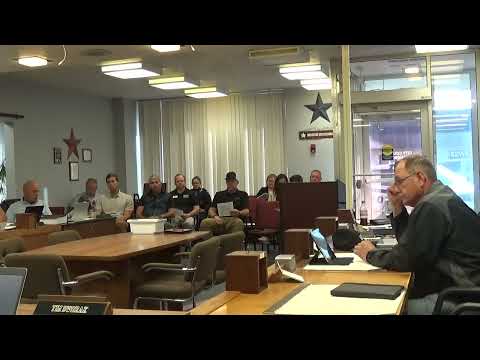
Seward council approves sale of rail-campus lots for dairy processing facility
Summary
The Seward City Council unanimously approved an ordinance and a purchase agreement to convey two lots in the Seward Rail Campus to a family-owned dairy processing company that plans an aseptic milk-processing facility designed to handle about 1.8 million pounds of milk per day.
The Seward City Council voted 7-0 to adopt an ordinance directing the conveyance of two lots in the Seward Rail Campus to Dairy Processing LLC and to approve a purchase agreement for the project.
The vote finalizes a package the city said will support a dairy processing facility on Lots 16 and 17 of the rail campus and authorize follow-up steps including an MOU to finalize project details.
City staff described the measure as the next step in a multi-year effort to develop the rail campus and attract processing capacity. "This is kind of the beginning of the whirlwind on this project that we've been working very hard," one staff member said, adding that the southern lot would be used for stormwater detention tied to the Worthman Boulevard project.
Todd Toles, who identified himself as owner of Toles Dairies and Dairy Processing LLC, and his project team addressed the council. "My name is Todd Toles, the owner of Toles Dairies and, the owner of Dairy LLC," he said. He described the plant's initial design capacity as 1.8 million pounds of milk a day and said the plant would use aseptic processing to produce shelf-stable milk products.
Project consultant Adam Burton, who described longstanding experience with UHT/aseptic processing internationally, said the team has assembled engineering and operations experts for construction and ramp-up. "I've been in this for 30 years," Burton said, describing his involvement in similar projects in New Zealand, Australia and elsewhere.
City staff and council members said the project is expected to leverage multiple funding streams and development tools, including state State Revolving Fund (SRF) assistance for wastewater work and a tax-increment financing (TIF) structure that the city said the project would be contingent upon. Staff said they expect to present a memorandum of understanding to the council at a subsequent meeting to finalize details and timelines.
Council members moved and seconded both the ordinance (designated ordinance number 2025-13) and the purchase agreement in separate motions; both actions were approved by recorded voice vote.
Officials emphasized continued coordination on infrastructure. Staff said portions of the rail campus water-main and street projects must be completed to serve the facility and that the project team and the administration had regular meetings scheduled to finalize the package.
The council did not set an implementation date in the ordinance text beyond standard publication and adoption procedures; staff said more implementation dates and detailed agreements would be included in the forthcoming MOU and related contract documents.