Get Full Government Meeting Transcripts, Videos, & Alerts Forever!
Get email alerts on the Opioid Reauthorization topic
No spam. Unsubscribe anytime.
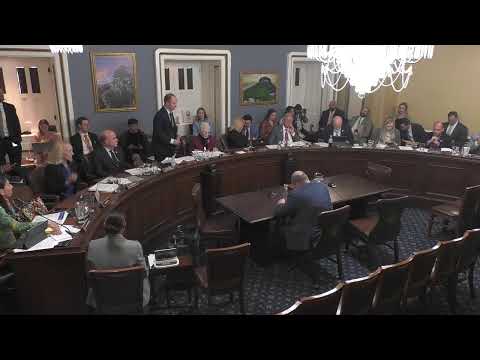
House Rules Committee advances reauthorization to fund opioid prevention, amid dispute over SAMHSA reorganization
Summary
The House Rules Committee advanced HR 24 83, the Support for Patients and Communities Reauthorization Act of 2025, clearing a rules package for floor consideration while members expressed deep disagreement about the Health and Human Services reorganization of SAMHSA and proposed rescissions of behavioral‑health funding.
The House Rules Committee on Monday approved a structured rule to bring HR 24 83, the Support for Patients and Communities Reauthorization Act of 2025, to the House floor, but debate revealed sharp partisan disagreement over whether the administration’s reorganization of the Substance Abuse and Mental Health Services Administration will undercut the law’s intent.
Supporters said the bill reauthorizes programs for opioid use disorder prevention, treatment and recovery that were first enacted in the SUPPORT Act of 2018 and credited earlier bipartisan investments with recent declines in overdose deaths. Opponents warned that the Trump administration’s personnel cuts and proposed rescissions at the Department of Health and Human Services and SAMHSA make the reauthorization hollow without protections or funding assurances.
The bill’s supporters, including witnesses from the House Energy and Commerce Committee, described the legislation as a continuation of bipartisan work to expand naloxone access, strengthen prescription drug monitoring programs and fund prevention, treatment and recovery services. “We must ensure communities have the tools to improve prevention, treatment, and recovery services for patients with substance use disorder,” said Chairman Guthrie of the Energy and Commerce Committee in his prepared remarks to the Rules committee. Guthrie and other supporters cited CDC data that by one recent measure tens of thousands of Americans died of overdoses in a 12‑month period, and said the reauthorization helps sustain programs that have driven measurable reductions in some states.
Rank-and-file members pressed witnesses and each other about an ongoing HHS reorganization that they said has led to staff reductions at SAMHSA and the rescission of previously committed grants. Ranking Member McGovern said the White House “fired hundreds of workers at SAMHSA” and proposed rescinding more than $1 billion in funding states rely on; he and other Democrats warned that those actions would undermine implementation of any reauthorization. Chairman Guthrie disputed some characterizations of the reorganization and said, “If the administration can do [these programs] more efficiently ... as long as these programs get accomplished, that’s what I want to work on.”
Members on both sides pressed for more detail. Representatives asked whether particular programs named in the bill — including grants for recovery housing, training first responders and prenatal/postpartum treatment services — would continue to be staffed and funded if SAMHSA is reorganized or if the administration reduces funding. Witnesses and members noted that some programs reauthorized in the SUPPORT Act are implemented locally and through Medicaid, and several members cited state and local organizations that rely on federal grants. Representative Bonamici offered an amendment to expand a bipartisan recovery housing pilot in the bill to all states; Representative McClellan proposed an amendment to bar further mass layoffs at SAMHSA. Those amendments were made part of the record as submitted testimony and were debated in the hearing, but they were not adopted as part of the Rules committee’s final package.
Committee members offered procedural and substantive amendments to the rule. Representative McGovern moved a procedural amendment to bar HHS or the White House from completing a reorganization of SAMHSA unless Congress enacts authorizing legislation; that motion to the rule was defeated on a roll call. Representative Ocasio‑Cortez proposed a motion to require release of mental‑health and substance‑use block grant funds that she said the administration had withheld; that motion was also defeated on a roll call. Representative Scanlon moved an amendment that would prevent federal funds from being used to carry out mass layoffs at SAMHSA; it likewise failed on a recorded vote. The Rules committee then approved the structured rule covering HR 24 83 and three Small Business Committee bills by roll call (clerk reported 9 yeas, 3 nays).
Why it matters: HR 24 83 would reauthorize programs that federal and local officials say helped expand naloxone access, strengthen prescription drug monitoring and support recovery services. But committee debate exposed a core implementation question: whether the relevant federal agency and its funding will remain intact to carry out the law. Committee Democrats argued that reauthorizing without protecting staffing and appropriations could leave communities without the services the bill purports to preserve; Republicans said the statutory reauthorization is the right first step and said they are open to an administrative redesign if the mission is preserved.
The Rules committee’s structured rule clears HR 24 83 for House floor consideration under the terms the committee adopted. Additional amendments and votes may follow on the floor. The bill’s supporters asked for quick Senate action to complete reauthorization.