Get Full Government Meeting Transcripts, Videos, & Alerts Forever!
Get email alerts on the Health Dysphagia topic
No spam. Unsubscribe anytime.
University of Wisconsin–Madison researcher offers free swallowing screenings and outlines dysphagia research at Verona
Summary
Ryan Burdick, a speech‑language pathologist and doctoral candidate, offered free swallowing screenings at Verona and described research linking swallowing problems to aging and Alzheimer’s disease, recruitment opportunities, and screening procedures.
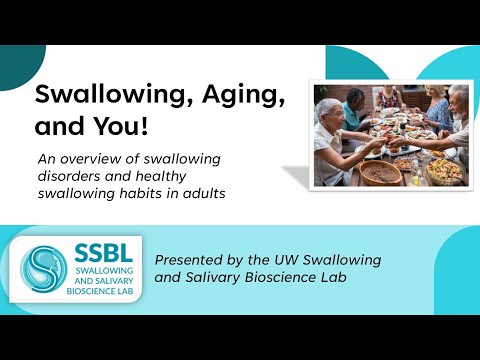
Ryan Burdick, a speech‑language pathologist, board‑certified specialist in swallowing disorders and a doctoral candidate at the University of Wisconsin–Madison, offered free swallowing screenings and described ongoing research during a presentation at Verona; the date of the talk was not specified.
Burdick said the screenings are "free of charge for any individuals who are interested" and described them as brief checks that include "a questionnaire, some water, and a cracker," adding that the screen is intended to identify people who should receive a fuller evaluation. "If it does turn out that there is maybe something that we should get looked at just to see, we actually have a note that we can give you to pass along to your primary care provider," he said.
Why it matters: Burdick emphasized that swallowing is a complex, brain‑driven process that people perform hundreds of times daily and that impairments (dysphagia) can lead to malnutrition, dehydration and aspiration pneumonia. He told the audience that research has reported a wide range—"32 to 75 percent"—of people with dementia experiencing swallowing problems and that about half of people diagnosed with Alzheimer’s disease "will eventually lose the ability to feed themselves within 8 years of the diagnosis," as reported in studies he summarized.
Burdick described how clinicians assess swallowing: an initial clinical or "bedside" swallow evaluation, which can be done at the bedside by giving small amounts of food or liquid and observing the response; and instrumental testing such as a video fluoroscopic swallow study, in which the patient swallows barium‑mixed foods and liquids under x‑ray so clinicians can see how material moves through the mouth and throat.
He outlined two broad treatment approaches. Compensatory strategies are immediate adjustments to reduce risk (for example, changing food texture or posture such as sitting upright or turning the head while swallowing). Rehabilitative approaches aim to strengthen swallowing muscles over time; Burdick demonstrated devices used in therapy, including an expiratory muscle strength training (EMST) device and a tongue‑resistance device designed to increase tongue strength.
The presentation also covered research and recruitment. Burdick said the lab is running studies that examine the relationship between swallowing and memory changes, and a separate study focusing on dry mouth for adults aged 60 to 75. "We are focused we have 1 study right now or sorry, 2 studies right now that are actually looking at swallowing and memory changes," he said. He asked interested individuals to sign up at the desk and said there were still slots available for the free screenings.
Logistics and contact: Burdick said the lab base is split among the VA’s Geriatric Research, Education, and Clinical (GREC) center, the University of Wisconsin–Madison Hospital, and the Center for Health Disparities Research near Westfield. He noted that speech‑language pathologists typically start the swallowing evaluation and work with ENT and gastroenterology clinicians as needed.
The presentation was informational and recruitment‑oriented; no formal board actions or votes occurred during the session.