Get Full Government Meeting Transcripts, Videos, & Alerts Forever!
Get email alerts on the Solid Waste topic
No spam. Unsubscribe anytime.
Beltrami County amends solid-waste ordinance to bill businesses by waste produced rather than by tier
Summary
Beltrami County approved amendments to its solid waste ordinance to change commercial billing from a tiered business registration model to a weight/container-based system managed through haulers; the board unanimously approved the changes after a public hearing.
Beltrami County commissioners approved amendments to the county solid-waste ordinance that replace a business-tier commercial billing system with billing tied to actual waste volumes and container size, the county’s solid-waste presenter said.
Brian, representing the county’s solid-waste division, told the board the main change is to "track waste instead of businesses" and to move billing to a model where haulers bill based on container size and frequency. In the hearing he explained the county previously used a business-registration and tier system that sometimes resulted in businesses paying the same amount despite producing different tonnages of waste.
The changes also add updated terminology and correct earlier references in the ordinance and define municipal solid waste (MSW) to reflect that the county will begin placing source-separated organics into the compost stream this fall. Brian told the board, "Once you source separate recyclables, it's against the law to put them back into the garbage," and said source-separated organics will be removed from MSW and routed to a compost stream at the Polk County landfill.
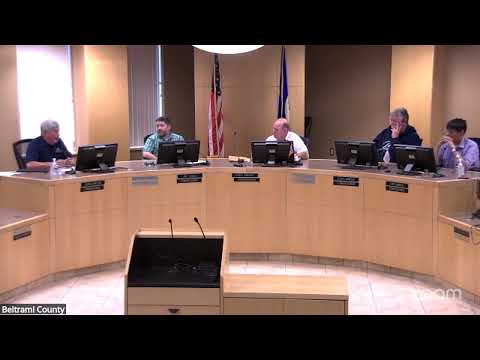
The board opened a public hearing on the ordinance amendment (motion by Commissioner Carlson; second by Commissioner Gould), heard the solid-waste presentation and took no public testimony, then closed the hearing (motion by Commissioner Gould; second by Commissioner Carlson). Commissioner Winger moved to approve the ordinance changes and Commissioner Carlson seconded; the motion passed 5-0.
During discussion Brian described the division’s transition through administrative systems — from a contractor model before 2015 to an in-house solid-waste division in 2016 — and the county's adoption of software systems including QuickBooks and an integrated scale-to-accounting system called WasteWorks. He recommended the ordinance changes be implemented on a timeline that would allow a smooth transition; he suggested a January start for the new billing process so parties could prepare, but the board did not set an effective date during the motion recorded.
The board's approval will require the county to coordinate with haulers on container sizes, pickup frequency and billing procedures; county staff said this will streamline invoicing and align commercial billing with how most haulers and industry participants manage accounts.