Get Full Government Meeting Transcripts, Videos, & Alerts Forever!
Get email alerts on the Ethics topic
No spam. Unsubscribe anytime.
Trainer for Utah Local Governments Trust reviews ethics laws, gift limits and conflicts for public employees
Summary
In an online training, a Utah Local Governments Trust instructor reviewed Utah ethics statutes, gift limits, nepotism rules and examples of potential conflicts for government employees, urging disclosure and consultation with HR or legal counsel for gray-area situations.
Mike, a trainer for the Utah Local Governments Trust, told a remote audience that public employees must weigh legal requirements, employer policies and personal morals when making decisions that affect the public.
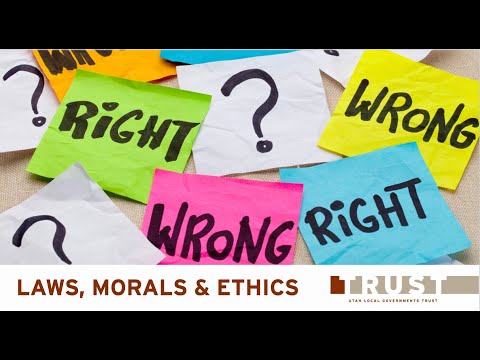
“Ethics is knowing the difference between what you have a right to do and what is right to do,” Mike said, quoting Justice Potter Stewart as he introduced situations where legal actions may not be ethical.
Mike outlined several Utah laws and workplace rules that apply to elected officials, county employees and municipal staff. He identified the Utah Public Officers and Employees Ethics Act (Title 67), the County Officers and Employees Disclosure Act, state nepotism restrictions and a statute originating as HB 163 that addresses misuse of public property. He summarized requirements that public officers disclose potential conflicts of interest and that employees not accept gifts or loans valued over $50 from vendors.
The instructor used everyday examples — doughnuts at training sessions, lunches with vendors, small tokens such as hats or pens — to explain how benign items can become ethical problems if they influence official decisions. “If that gift changes or affects the choices that you make, it may be an ethical problem,” Mike said.
He discussed common duty questions that public servants face: to whom they owe obligations (the public, their employer, themselves and their family), whether a benefit is short- or long-term, and how to choose among multiple “right” options. He advised disclosure when employees have overlapping roles that could create a conflict, for instance when an employee’s employer also does business with the governmental entity they serve.
Mike warned that some statutes carry significant penalties. Citing the misuse-of-public-property law, he said personal use of agency resources can constitute a felony in certain circumstances. He also described potential misdemeanor charges for official misconduct if an officer intentionally uses office authority to benefit or harm another.
To illustrate workplace consequences, Mike described his prior role as a risk manager for the Salt Lake Organizing Committee for the 2002 Winter Olympic Games. He said he pushed for drug screening of staff, was advised to stop, then later the organization adopted the policy after an incident and outside pressure. He recalled that implementing the policy led to some staff departures but ultimately improved safety during the games.
Jason, a moderator for the Trust webinar, told participants the session was a useful departure from routine loss-prevention training. “This is a really, really important thing that everybody has to deal with at the organization,” he said.
Mike closed by reminding attendees to consult their HR office or in-house counsel on specifics and to rely on written departmental policies and professional codes of ethics where applicable. He invited questions and directed participants to use the webinar chat for follow-up.
Ending: The training was framed as guidance and examples rather than formal legal advice. Mike repeatedly stressed disclosure, consultation with HR or legal counsel for uncertain situations, and the difference between actions that are legal and those that are ethically appropriate.