Get Full Government Meeting Transcripts, Videos, & Alerts Forever!
Get email alerts on the Land Use Flooding topic
No spam. Unsubscribe anytime.
Council approves residence at 2800 Champs Elysees after hydrology review; neighbors and applicant disagree on flood risk
Summary
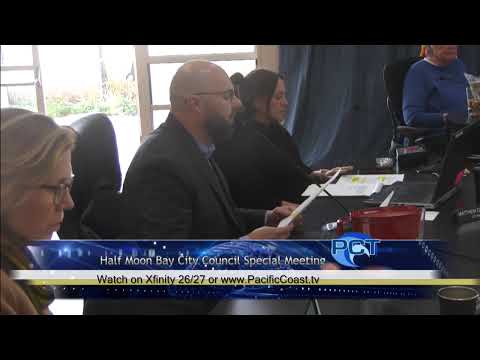
The Half Moon Bay City Council voted June 3 to approve a coastal development permit and architectural review for a new two‑story residence at 2800 Champs Elysees Boulevard after the city received a site‑specific hydrological analysis and peer review work requested by the planning commission and by the council.
The Half Moon Bay City Council voted June 3 to approve a coastal development permit and architectural review for a new two‑story residence at 2800 Champs Elysees Boulevard after the city received a site‑specific hydrological analysis and peer review work requested by the planning commission and by the council.
Why it matters: Neighbors say repeated flooding along the Pullman Water Course and recent increases in runoff mean new development will worsen flood impacts to adjacent properties. The city and the applicant point to updated hydrology reports and engineering peer review finding the proposed design and on‑site detention would not cause “adverse direct or cumulative” off‑site flooding under the tested scenarios. The decision resolves a multi‑year dispute that included planning commission denials, a city council appeal and a subsequent settlement agreement requiring council reconsideration.
What council approved and why - Project: a 4,710‑square‑foot, two‑story single‑family home with a two‑car garage and a covered breezeway. A condition of approval requires an irrevocable offer of an easement along the northern property line for potential future drainage improvements. - The planning record includes multiple prior hearings, litigation and a site‑specific hydrological assessment attached to staff materials (the April 2025 CHAFE analysis and Schaeffer Wheeler peer review). Staff recommended approval after the site‑specific work. - Council discussion focused on whether the record complied with Local Coastal Program policies (notably policy 7‑5‑1 and 7‑5‑7), whether the modeling used appropriate storm assumptions and whether adequate mitigations and easements were in place. City staff and the retained consultants concluded the project complied with the cited LCP policies and that on‑site detention sized for a 25‑year, two‑hour event would not create off‑site flooding impacts.
Opposition and technical dispute - Neighbors and several speakers at the public hearing argued the hydrology work relied on older or dry‑season data, did not reflect recent large flows, and omitted a Rossi/EDC report and other field evidence documenting overtopping and channel changes allegedly driven by upstream discharges (notably from agricultural properties east of Highway 1). Speakers showed photos and videos of high flows and erosion, and some said home values had been reduced by flooding. - Applicant’s attorney Mark Massara said the file contains multiple approvals and expert reports finding no causal link between the project and Pullman Ditch flooding, and described the proposed easement and on‑site work as an opportunity to help create a bypass around an existing obstruction.
Formal action and votes - The council voted to approve the project and to determine that the project complies with the previously adopted initial study/mitigated negative declaration and that the project is categorically exempt under CEQA Guidelines Section 15303 (new construction). Roll‑call recorded: Council Member John Johnson — no; Council Member Nagenghast — yes; Council Member Penrose — yes; Vice Mayor Debbie Redick — yes; Mayor Brownstone — yes.
Discussion versus decision - Discussion only: Neighbors urged further independent review and a broader watershed approach to Pullman and Kehoe Ditch issues; many speakers asked the city to prioritize a long‑range drainage plan that may include bypasses, reroutes, or partnerships with other property owners such as Rocket Farms. - Decision: Council approved the single‑family residence application as conditioned; staff noted that the approval could be appealed to the California Coastal Commission within the 10‑working‑day appeal period and that the commission could make a substantial‑issue determination and potentially schedule a de novo hearing.
Next steps and context - The council asked staff to accelerate long‑range drainage planning and outreach to upstream property owners (including Rocket Farms) and to consider assessment district or grant options to fund watershed improvements. The Pullman Ditch issue remains a separate, ongoing policy and capital project question; the approved house does not itself authorize any off‑site channel work.
Ending Council members said they will pursue short‑term and long‑term steps on drainage and emphasized the project decision was separate from the broader Pullman Ditch remediation work that the city must still pursue.