Get Full Government Meeting Transcripts, Videos, & Alerts Forever!
Get email alerts on the Budget Transit topic
No spam. Unsubscribe anytime.
Wilsonville adopts $228.9 million FY2025–26 budget after divided council vote; transit expansion to Clackamas Town Center draws heated debate
Summary
The council adopted the fiscal year 2025–26 budget 3–2 after rejecting an amendment to cut SMART staffing tied to a proposed fare-free route to Clackamas Town Center. The meeting featured extended public testimony both for and against the new route and a technical briefing on Statewide Transportation Improvement Fund (STIF) funding.
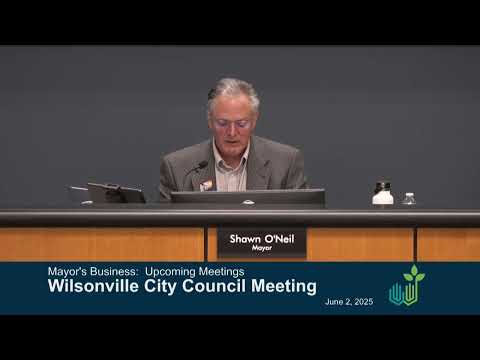
The Wilsonville City Council on June 2 approved the fiscal year 2025–26 city budget in a 3–2 vote after extended public testimony and an hour-plus council debate focused on a proposed SMART transit route to Clackamas Town Center and the staffing and funding that support a new regional transit center.
Council approved the comprehensive budget (motioned as $228,927,800 in the adopted motion). Councilor Adam Cunningham offered an amendment to reduce SMART staffing — removing four transit drivers and two customer-service representatives — and lower the total to $228,435,036; the amendment was seconded and failed on a 3–2 vote. After discussion, the main motion to adopt the full budget passed 3–2.
Transit staff and finance staff provided a multi-part briefing to the council. Assistant Finance Director Catherine Smith and Finance Director Keith Katko reviewed the citywide budget and highlighted that the total consolidated budget across funds was about $228 million and noted the budget committee’s review. SMART Transit Director Dwight Brashear then explained how the Statewide Transportation Improvement Fund (STIF) — established by HB 2017 — is collected statewide and distributed to qualified entities (TriMet in the Tri-County area), and that most STIF formula funds are routed through TriMet to subrecipients such as SMART.
Brashear said STIF (state transportation infrastructure funding) revenue estimates for the upcoming biennium are large — roughly $243.4 million statewide — and that SMART has recently been receiving more STIF dollars than earlier conservative budgets projected: staff budgeted about $2 million annually in earlier forecasts, but Brashear said SMART is on track to receive about $4.3 million this fiscal year. He emphasized that SMART is a subrecipient of TriMet and that TriMet has already begun disbursing regional coordination funds in support of the proposed Wilsonville–Clackamas Town Center service. Brashear described program rules: qualified entities (TriMet) receive the funds and pass them to subrecipients; STIF funds must support public transit expansion and cannot be used to supplant local revenue.
The proposed Clackamas Town Center routing and staffing generated the meeting's largest public response. The council heard roughly two dozen in-person and online comments; testimony split sharply. Supporters said the route will increase job and medical-accessibility, serve veterans and students, and reduce car travel; Garrett Pryor and several other speakers urged council to pass the budget and preserve transit expansion. Opponents cited Clackamas Town Center and the surrounding Southgate area’s higher crime reports and argued Wilsonville should not create a direct, fare-free conduit to an area they characterized as a crime hot spot. Speakers cited county crime-dashboard figures and a Clackamas County sheriff's concern about increased calls for service associated with other transit expansions.
Councilors exchanged questions about financial risk, service design, and public safety. Staff and Brashear said SMART’s overall reserve and financial position had stabilized in recent years, in part because of STIF dollars and federal grants; Brashear said SMART operates “in the black” and that TriMet’s population/payroll formula covers a large share of the new route's operating cost. Several council members cited the transit master plan (adopted in 2023) and prior briefings that listed Clackamas Town Center as a regional connection in the plan.
Councilor Cunningham argued that the route had not received clear public vetting in some outreach products and raised safety concerns; other councilors said the route was identified in previous plans and regional coordination made the route a cost-effective next step. Council President Berry and others framed the decision as one of regional connectivity and the city’s role in providing service to residents who travel for work, medical care and education.
After deliberation, the council adopted the budget resolution (Resolution No. 3200) by a 3–2 vote. The record includes the amendment motion and vote, the main motion and its final tally, and extensive public testimony. Staff said STIF rules, future TriMet allocations, and SMART’s financial forecasts will guide next steps; council members asked staff to continue monitoring revenues and to return if the fund balance or STIF outlook changes.