Get Full Government Meeting Transcripts, Videos, & Alerts Forever!
Get email alerts on the Housing Policy topic
No spam. Unsubscribe anytime.
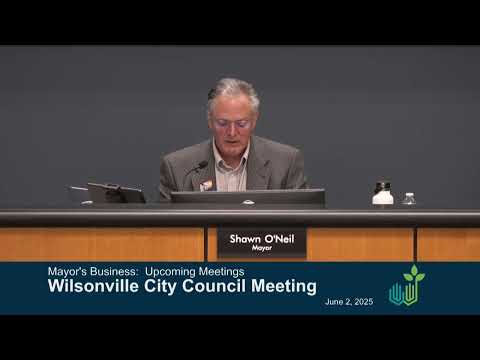
Wilsonville adopts 2025–2045 housing needs and housing production strategy; council votes 5-0
Summary
After a multi-year planning process, the council adopted on first reading a housing needs and capacity analysis for 2025–2045 and unanimously adopted a housing production strategy that lists actions to address capacity, affordability and diverse housing types.
The City Council on June 2 took formal steps to update Wilsonville's housing planning for the next 20 years by adopting a housing needs and capacity analysis as a subelement of the comprehensive plan (ordinance No. 898, first reading) and adopting a standalone housing production strategy (resolution No. 3203).
Senior Planner Kim Reibel and consultant Beth Goodman (Echo Northwest) presented the "Housing Our Future" project, summarizing a multi-year public engagement and analysis process. Goodman said the analysis found Wilsonville needs to accommodate approximately 2,815 new dwelling units between 2025 and 2045 and that the city's existing buildable land has capacity for about 3,600 new units — a surplus of roughly 819 units.
The presentations emphasized that, despite overall capacity, the city must plan for a broader mix of housing types to meet changing household sizes and affordability needs, including townhouses, multifamily units with three-plus bedrooms for multigenerational households, units accessible for people with disabilities, and smaller units for an aging population.
Goodman and Reibel described affordability metrics: the presentation cited a median household income example ($116,900) and a median single-family sale price in Wilsonville of about $585,000, with average monthly rent near $2,000; the consultants used those figures to show gaps between typical housing costs and what working households can afford. The housing production strategy focuses on actions to increase the feasible production of housing affordable at or below about 80% of median family income and on foundational steps such as hiring a housing specialist and identifying funding sources for implementation.
Councilor Dunwell, who chaired the Housing Our Future task force, praised staff and consultants and emphasized that some "foundational" actions (rental inspection program, community land trust, home-buyer assistance) may require more time or funding than the state's six-year implementation window but were included to preserve longer-term options.
The planning commission recommended adoption (Planning Commission Resolution LP 25-1), and council members voted 5-0 to approve the ordinance on first reading and 5-0 to adopt the housing production strategy. City staff said each recommended action will undergo its own public process and that council will receive periodic updates, including a midpoint review in three years to evaluate progress and adjust actions as needed.