Get Full Government Meeting Transcripts, Videos, & Alerts Forever!
Get email alerts on the Land Use Coliving topic
No spam. Unsubscribe anytime.
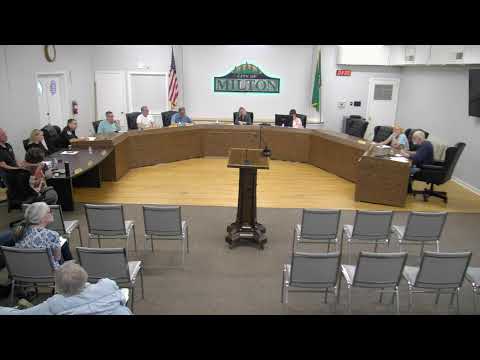
Milton council approves code amendment allowing co‑living dwellings in multifamily zones
Summary
The Milton City Council voted 4‑1 to adopt Ordinance 2109‑25, adding a definition and use allowance for co‑living dwellings in zones that permit multifamily housing; council and staff discussed scope, building‑code and business/license distinctions and conditional‑use permit paths.
Milton, Wash. — The Milton City Council voted 4‑1 Monday to adopt Ordinance 2109‑25, a zoning code amendment that adds “co‑living dwellings” as a permitted multifamily use in zones that already allow apartments and similar developments.
Planning Manager Stalnecker told the council the amendment “is just a simple amendment to the use table and adding a definition, which allows co living dwellings.” The planning commission recommended the change after a public hearing, and the council held a state‑noticed public hearing April 21; Stalnecker said the state had no comments on the proposal.
The ordinance creates a distinct multifamily option intended to “increase just the diversity and affordability in houses,” Stalnecker said, describing co‑living as developments in which residents may have private bedrooms but share kitchens and bathrooms in a campus or building setting. Stalnecker said the use would be allowed only in zones that allow multifamily uses (the council packet highlighted those areas in blue) and would not apply to the city’s single‑family NR‑1 zones; conversions in NR‑2 require a conditional‑use permit.
Council members and staff spent the meeting distinguishing co‑living developments from informal roommate arrangements. Stalnecker explained that shared‑living arrangements where unrelated people simply live together and share a single lease or household chores are treated differently under local land‑use rules. “There is a slight difference,” Stalnecker said, noting co‑living usually involves individual leases, private rooms with doors and separate tenancy protections.
Council member Whelan raised questions about whether co‑living would function as a business and how the city would detect conversions of existing homes into co‑living uses. Stalnecker said, “If someone came in and wanted to construct one of these, it would be similar… If someone happened to have an existing house in a multifamily zone and we became aware that they converted it, we would address that as we normally do.” She added that building‑code requirements (the International Building Code) cover safety items such as egress windows and sprinkler systems for larger occupancies.
Council member Hall moved to approve the ordinance; Mayor Pro Tem Whitaker seconded. The motion passed with a vote read as “Carried 4‑1.” The meeting minutes and roll call cited the tally but did not name individual votes in the public audio available.
Supporters and opponents raised safety and tenant‑protection concerns during the public comment portion. Susan Johnson, a Milton resident, told the council co‑living can provide “places that are safe” for people who cannot afford other housing and noted that co‑living tenancies rely on written leases. Nicholas Gordon, who spoke earlier in the meeting on a different agenda item, said co‑living “from a public‑safety standpoint… just screams nightmare” if not carefully regulated.
Stalnecker and council members said the code amendment creates an additional option for developers and is not a mandate; it mirrors state guidance and reflects a process the planning commission already reviewed. The council noted that conditional‑use review in NR‑2 would include public hearings for conversions in or near the town center.
The ordinance takes effect as listed in the meeting materials; council members asked staff to clarify implementation steps for conversions and to supply backup materials requested by at least one council member before enactment.
Milton’s planning manager and staff said they would follow up with additional documentation about permit procedures and state law references for council members who asked for more detail.