Get Full Government Meeting Transcripts, Videos, & Alerts Forever!
Get email alerts on the Use Variance topic
No spam. Unsubscribe anytime.
BZA denies request to convert North Capitol convenience store into a full‑service restaurant
Summary
The Board of Zoning Adjustment denied a request to change a longtime convenience store at 2324 North Capitol Street NW into a full‑service restaurant, finding the applicant failed to meet the high standard for a use variance and special exception.
BZA denies restaurant conversion at North Capitol Street, citing failure to meet variance standard.
The District of Columbia Board of Zoning Adjustment on June 4 denied an application (21151) to convert a convenience retail store at 2324 North Capitol Street NW into a full‑service restaurant, concluding the applicant did not meet the legal standard for a use variance.
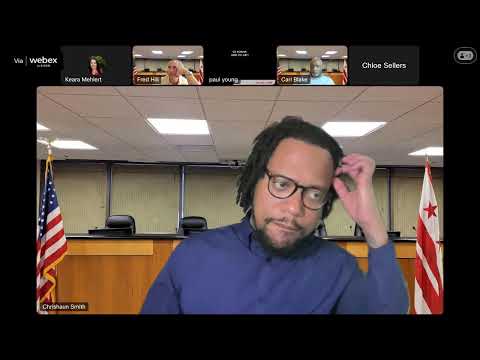
Chairman Fred Hill and other board members said the applicant failed to show an exceptional or extraordinary condition that would prevent reasonable use of the property under existing zoning. "I just don't think the applicant has made the case in order to meet the high bar" for a use variance, Chairman Hill said during deliberations, citing the three‑pronged test the board must apply for use variances.
Board members noted the propertycan host a number of matter‑of‑right uses and that neighborhood concerns about a lack of restaurants or a so‑called food desert are not criteria that justify a use variance. Board member Kershaw Smith and Vice Chair Carl Blake echoed that view, saying the applicant had not demonstrated the required burden of proof.
The application sought a special exception under Subtitle C, Section 204.9 and a use variance to allow a nonresidential restaurant use in an RF‑1 zone. The proposal drew testimony from residents and review by the Office of Planning; OP's report did not persuade the board that the variance test was satisfied.
The board moved and seconded a motion to deny and the staff recorded the vote as 3‑0‑2 to deny application 21151.
Why it matters: Use variances in the District carry a high legal threshold to protect zoning integrity; the board reiterated that policy goals such as neighborhood convenience or economic need do not substitute for the legal standard required for a variance. The owner may pursue a matter‑of‑right use or a smaller special‑exception path where permitted by code.
What happens next: Denial of the variance does not prevent the owner from proposing alternatives that comply with zoning or from reapplying with additional evidence demonstrating the variance criteria could be met.