Get Full Government Meeting Transcripts, Videos, & Alerts Forever!
Get email alerts on the Transportation Tour Buses topic
No spam. Unsubscribe anytime.
Salem committee narrows tour‑bus parking rules, makes temporary drop zones for high‑demand weekends
Summary
The city committee approved amendments to a proposed ordinance to shift and shorten several tour‑bus parking spaces downtown, making key Washington Square spots 10‑minute drop zones for October and removing a proposed Bridge Street stop.
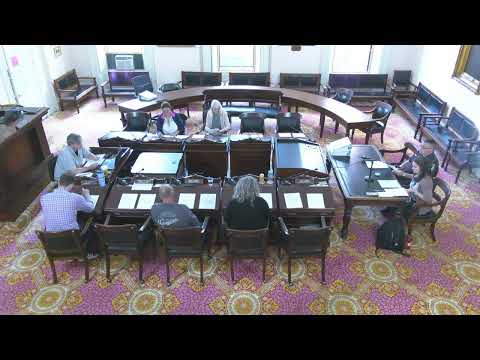
The Salem City Committee on Public Health, Safety and Environment voted on June 2 to amend a draft ordinance that changes where and how tour buses may park and drop off passengers downtown, including converting two Washington Square locations to short (10‑minute) drop zones during the heavy‑visitor month of October and removing a proposed Bridge Street bus stop.
The changes respond to repeated safety concerns from police and residents about buses blocking sight lines and pedestrian areas during high‑traffic weekends, most notably the Halloween season. Committee members and staff said the shorter limits aim to keep buses moving and reduce the instances of drivers stopping in roadway lanes.
Christina Hodge, assistant transportation director, outlined the ordinance recommendations from the Transportation Commission, describing proposed new and modified parking areas and time limits. She said the measures were intended “to create more spaces for those buses to safely either pull off to the side of the street or to idle while a tour group is at a nearby destination.” Hodge gave detailed locations, times and lengths for proposed zones, including limited October‑only drop zones and year‑round tour‑bus spaces.
Lieutenant Tucker of the Police Department spoke about enforcement tradeoffs and favored shorter time limits. “What we really wanna achieve is a system that makes it easy to comply with, makes people willing to comply with it, and hopefully will reduce the need for enforcement,” he said, adding that shorter limits can change behavior even where staffing to re‑check time limits is limited.
Jeff Swartz, vice chair of the Transportation Commission and executive director of the Salem Chamber, said the commission and local businesses weighed in. “We did speak with a number of the businesses that rely on those spaces,” he said, noting uses ranging from school groups to cruise ship shore excursions and walking tours that have short turnaround needs.
Committee debate focused on safety, circulation and the practical effects of the changes. Councilor Watson Felt described “bad actors” who drop passengers in unsafe locations and supported 10‑minute zones to increase turnover. Other councilors and staff raised concerns that shorter limits could increase bus circulation near the common and asked staff to identify where buses should park after dropping passengers (for example, Canal Street, Ford Avenue or other lots farther from the common).
Key ordinance details discussed and retained in committee record include: - Bridge Street: an initially proposed 10‑minute drop off adjacent to the Old Salem Jail lot (beginning 20 feet east of the lot entrance for 55 feet) was removed from the ordinance after committee amendment and vote. - Canal Street: a proposed weekend, October‑only tow zone (9 a.m.–6 p.m.) along a long stretch was discussed as a way to provide additional parking away from the core downtown. - New Derby Street: a proposed October, 10‑minute drop zone (approximate 100 feet) that would affect three existing metered spaces. - Washington Square West and South: committee approved amending the draft so that Washington Square West and Washington Square South would be 10‑minute drop zones in October (the committee retained existing year‑round language elsewhere to preserve 1‑hour metered parking for other months as needed). The committee clarified certain distance measurements in the ordinance language before approval.
Formal committee actions recorded in the meeting transcript included a motion to delete a paragraph in section 1 that would have repealed an existing Washington Square South stop (moved by Councilor Harper, seconded by Councilor Biersdell; motion carried), an amendment to change Washington Square West (moved by Councilor Jerzel, seconded by Councilor Harvey; motion carried) and a motion to remove the Bridge Street paragraph from the draft (moved by Councilor Jerso, seconded by Councilor Hart; motion carried). The committee chair said staff and legal would clean up ordinance language before the item returns to the full City Council.
The discussion produced several staff directions rather than final citywide policy changes: transportation staff were asked to refine the exact measurements and wording (including a recommendation to retain certain year‑round metered spaces outside October), and the Transportation Commission and police were asked to work on signage, routing guidance and enforcement considerations. Staff and commissioners also discussed longer‑term options such as a registration process for tour buses, dedicated bus routes, and identifying or modifying remote parking lots for longer‑term coach storage.
The committee transmitted the amended ordinance language to the full City Council for final action and instructed staff to follow up with more precise measurements and enforcement plans. The committee also asked the Transportation Commission to study signage and routing to direct buses to the newly designated drop and parking zones.
Ending: The amended parking rules are intended to be an interim operational step ahead of Halloween and other high‑visitor weekends; the committee said it expects further work from staff and the Transportation Commission on signage, bus routing and enforcement before reporting the ordinance back to the council for adoption.