Get Full Government Meeting Transcripts, Videos, & Alerts Forever!
Get email alerts on the Transportation Safety topic
No spam. Unsubscribe anytime.
Red Bank staff outline short- and long-term fixes after two corridor safety studies
Summary
City engineers presented two studies recommending short-term 'spot' safety measures and longer-term redesigns for Dayton Boulevard, Morrison Springs Road and Ashland Terrace, including restriping, signal coordination, pedestrian beacons, jersey barriers and possible lane reconfiguration to improve safety around a new school.
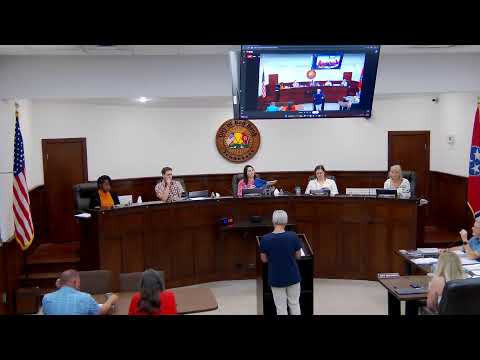
Director Tate presented two traffic safety studies to the commission: a Morrison Springs Road and Dayton Boulevard safety analysis and an Ashland Terrace and Dayton Boulevard safety and school-zone study. The consultant reports offer short-term, low-cost “spot” safety improvements and longer-term redesign options.
The Morrison Springs analysis recommends enhanced signage and pavement markings, signal-timing adjustments, pedestrian safety measures such as quick-response beacons at crosswalks, restriping to reduce last-second lane changes and, as a longer-term priority, installing jersey barriers in front of storefronts. Tate said the jersey-barrier work is “one of our top priorities” and would begin once the FY26 budget is approved.
On Ashland Terrace, the consultant proposed converting four lanes to three with a center turn lane (a rightsizing or “road diet”) and cited an estimated daily traffic volume of 17,600 vehicles. The study reported the lane reconfiguration could reduce crashes by “47 percent,” but noted that peak-hour direction counts exceed 875 vehicles per hour, which may degrade level of service and require additional evaluation before a full implementation.
Tate and other staff emphasized the distinction between traffic level-of-service (LOS) metrics and safety outcomes: rightsizing may not improve LOS but could reduce crash frequency and severity. The study recommended coordinating traffic-signal timing along the corridor, reviewing speed limits (a proposed 35 mph posted speed on Ashland Terrace with a 25 mph school-zone setting), and adding school-zone flashing beacons. The police chief outlined plans to contract with Blue Line Solutions for camera enforcement in school zones once signage and speed-limit changes are in place.
Commissioners and staff debated whether the reports’ short-term recommendations are adequate or merely “band-aids.” One commissioner said the proposed short-term measures “feel like we're opting for a Band Aid in lieu of surgery.” Tate replied that the short-term items are intended to improve safety until a capital project can fund a complete redesign: “This was not meant to be an all inclusive redo. This was just meant…what can we do to add additional safety improvements…until we can get to a position where we can bring in somebody to do the design work for a new intersection there?”
Public comments echoed the concern for long-term planning and multimodal design. Resident Clifford McCain said the corridor changes have been discussed for years and noted Chattanooga’s involvement; resident Julie Golia urged officials to “get it right” because corridor changes will transform how people walk, bike and drive.
Why it matters: The area includes a newly opened Point Christian Academy near Red Bank Baptist Church and high daily traffic volumes; staff said short-term measures can be implemented quickly while larger capital projects and rightsizing require coordination with TDOT, Chattanooga and further design work.
What’s next: Staff will prioritize installation of school-zone signs and beacons, pursue jersey-barrier installation after FY26 budget adoption, pursue signal-timing coordination, and return with design-level recommendations for long-term intersection redesign and potential lane reconfiguration.