Get Full Government Meeting Transcripts, Videos, & Alerts Forever!
Get email alerts on the Training Active Shooter topic
No spam. Unsubscribe anytime.
POST pilots Learning Domain 44: active‑assailant training to be added to basic course
Summary
POST presented results from pilot deployments of a new 16‑hour 'active shooter' learning domain (LD44) that will be incorporated into the basic course. The domain emphasizes situational decision making—when to use rapid response versus systematic approaches—and will be introduced toward course end after complementary domains.
POST reported that a new basic course learning domain, LD44 (Active Assailant/Active Shooter), was piloted at several academies and will be added to the regular basic course with a recommended 16‑hour block for module 1 and a 6‑hour block for module 2.
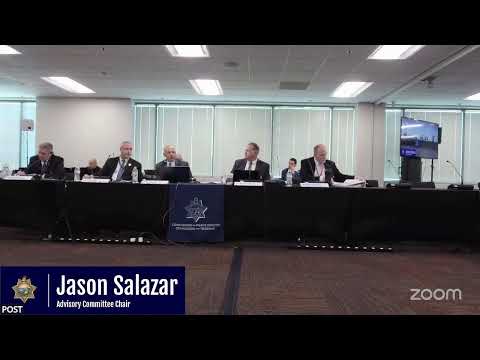
What POST presented: Law enforcement consultant Brandon Kiley briefed the advisory committee on pilot classes hosted by California Highway Patrol, Orange County Sheriff, Riverside County Sheriff, Sacramento County Sheriff, San Diego Regional Public Safety Training Institute, San Joaquin Delta College, and Ventura County Criminal Justice Center. POST collected about 318 student questionnaires and instructor feedback from the pilots.
Instructional goals: LD44 training focuses on developing cadets’ ability to read the operational landscape and decide whether a rapid entry/response is needed or whether a more deliberate, systematic approach is appropriate. Required learning activities include solo officer response, team movements, bounding and overwatch, and adapting tactics to available resources.
Key implementation points - Placement: POST staff recommends LD44 be presented toward the end of the basic course after students have received patrol, use‑of‑force, scenario and allied domains. - Hours: recommended coverage—Regular basic course Module 1: 16 hours; Module 2: 6 hours. - Local flexibility: pilot instructors emphasized that regions and presenters may need tactical flexibility—diamond or wedge formations and other movement concepts were noted—but the training and testing specifications provide a common roadmap.
Committee concerns and clarification - Several advisory members asked whether multi‑jurisdictional coordination is addressed; POST replied that the learning activities can be layered to include multi‑agency scenarios but that local resource variance requires some instructional flexibility. - Members underscored solo‑officer response training so officers know how to act when they are the first to arrive and may have no immediate backup.
Ending: POST will finalize training and testing specifications and support trainers with lessons learned from pilots; advisory members urged close monitoring and possible in‑service updates after basic course rollout.