Get Full Government Meeting Transcripts, Videos, & Alerts Forever!
Get email alerts on the Municipal Finance topic
No spam. Unsubscribe anytime.
Columbia explores sponsorships, property sales and market-house changes to bolster revenue
Summary
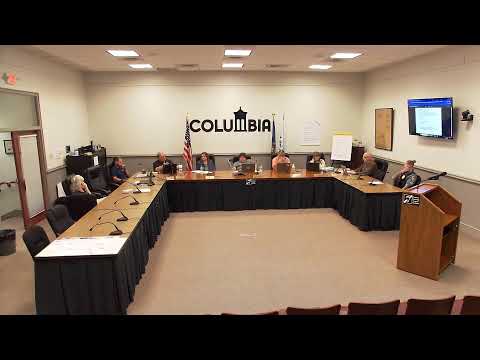
At a June 3 workshop the Columbia Borough Council and staff compiled a long list of ideas — from selling ad space and naming/sponsorship programs to revising permit fees and marketing the market house — aimed at closing budget gaps and avoiding another property tax increase.
Columbia Borough officials and residents spent much of a June 3 workshop brainstorming revenue and cost‑saving ideas aimed at shoring up the borough's general fund and avoiding another property tax increase.
The conversation, billed as informal brainstorming, ranged from short‑term steps such as selling ad space on borough property and the borough website to longer‑term moves including selling excess borough land, revising the permit‑fee schedule to spur development, and pursuing a data‑center lead tied to regional activity around Three Mile Island.
Why it matters: council members said the borough's reserves are shrinking and leaders want options that could limit or reverse the need for another millage increase. The workshop combined proposals that could produce modest revenue quickly (sponsorship of trash cans, light poles, wayfinding signs, banner ads on the borough website) with proposals that would take months or years (property sales, marketing the McGinnis site, utility and permit changes).
Discussion highlights
- Advertising and sponsorships: Council members discussed letting businesses sponsor small items (trash receptacles, wayfinding signs, light poles) and selling ad space on the borough website and select borough land. Starview Brews and a local outdoor‑advertising company had inquired about signage; the fence along the Northwest River Trail was discussed as a potential location but council members noted the fence is partly state property and that Susquehanna National Heritage Area has previously approached Parks & Recreation to run fundraising/advertising there.
- Market House operations and marketing: Borough staff and council members said the Market House kitchen opened recently with reduced hours (Monday 11 a.m. to 6 p.m.; Tuesday and Friday 11 a.m. to 4 p.m.; Saturday 10 a.m. to 2 p.m.) and that manager Bonnie is working to attract vendors and produce sales. The council discussed using existing marketing dollars and Discover Lancaster relationships to promote the Market House, possibly adding a second weekly market day if vendor support rises. Council and staff noted facility costs are significant: the Market House utility budget last year was about $30,000, and there are ongoing roofing/leak and mechanical maintenance issues.
- Events and rental policy changes: Council members said large, multi‑day events and weddings can be costly because of staff time and security needs; they discussed limiting the borough's exposure by maintaining smaller event windows and raising rental fees for larger bookings.
- Web, payments and digital tools: Staff outlined barriers to immediate online payment for things like parking tickets because of back‑office timing with the district justice's (DJ) office and accounting workflows. The group also discussed modernizing parking (ParkMobile) and adding website features such as a chatbot to help users find legal ads, forms and staff contacts, though council members expressed concern about costs and accuracy.
- Permit fee schedule and development incentives: Council discussed benchmarking against Lancaster City's permit fees (for example, a residential model roughly tied to 45 cents per square foot) and lowering permit fees for large projects to incentivize investment and long‑term tax revenue, even if that reduces short‑term permit receipts.
- Selling or repurposing borough assets: Staff reported progress on steps needed to sell or otherwise dispose of several borough properties, including the firehouse, the wastewater treatment plant, and excess acreage near the Public Works site. Officials said one lease (firehouse) may have lapsed renewal windows and an appraisal is underway; selling properties would require legal, appraisal and public‑process steps.
- Energy and capital improvements: The council discussed energy upgrades (including solar) and whether passive building strategies, operable clerestory windows or other investments could reduce Market House utilities over time. Some members suggested commissioning an energy analysis to estimate payback.
Voices from the meeting
- Bonnie (Market House manager) summarized operating hours and vendor arrangements: "The hours are Monday, 11 to 6, Tuesday, 11 to 4, Friday, 11 to 4, and Saturday, 10 to 2," she said.
- Ethan, a local resident who works in technology, cautioned about chatbot limits: "Even if you give it the right information... it can still give wrong information," he said, urging caution on reliance on predictive AI for official guidance.
No formal decisions; steps forward
The session was a workshop: council members asked staff to follow up on specific items (fee comparisons, property appraisals, advertising proposals, and the McGinnis pre‑bid schedule) and to present more detailed figures and recommended next steps at future meetings. Councilman Peter Stahl and other members reiterated that the goal is to identify options that could prevent or reduce future tax increases.
The meeting included a brief formal action at the start (a voice vote to approve the published agenda). The workshop portion produced no final votes; council requested follow‑up reports and asked staff to coordinate presentations from interested parties (for example, Susquehanna National Heritage Area or local businesses) before council considers any revenue‑sharing or advertising agreements.
Ending
Council members said they will compile the ideas and cost estimates and return with more concrete proposals, including fee‑schedule comparisons and a market‑house business plan. Staff also scheduled a pre‑bid meeting for the McGinnis project's phase 1 soil stabilization and asked interested vendors to attend the on‑site pre‑bid session the following Thursday.