Get Full Government Meeting Transcripts, Videos, & Alerts Forever!
Get email alerts on the Transparency Enhancement Grants topic
No spam. Unsubscribe anytime.
House appropriations panel adopts transparency changes for enhancement grants, requires nonprofits’ IRS 990s
Summary
The Michigan House Appropriations Committee unanimously adopted an H-1 substitute and an amendment to House Bill 44 20 to require the Department to list enhancement grants and require awarded nonprofits to provide IRS Form 990s; the amendment also bars using grant funds to pay certain state debts.
The Michigan House Appropriations Committee voted unanimously to adopt an H-1 substitute to House Bill 44 20 and to report the bill as amended, requiring the state to publish awarded enhancement grants and their status and obligating awarded nonprofit recipients to provide IRS Form 990s to the department.
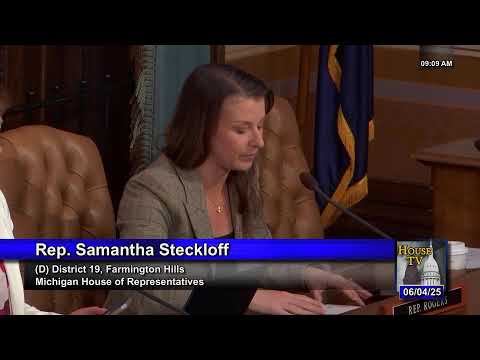
Committee Chair Bolin presided as representatives voted 28–0 to adopt the H-1 substitute and later 29–0 to report the bill as amended with recommendation as a new substitute. Representative Steckloff offered and the committee adopted Amendment No. 1, which removes language allowing enhancement grant funds to be used to pay back taxes, tax liens and other obligations owed to the state.
The bill, originally sponsored by Representative Koontz and described in committee as a measure to codify enhancement grant transparency, would require the department to list grants that received funding, the amount awarded and each grant’s status on the department website. It would also require each nonprofit that receives an enhancement grant to provide its IRS Form 990 to the department so the public can more easily review nonprofit finances.
“Transparency is paramount to the work that we do here, making sure that tax dollars are responsibly allocated and that people in Michigan know that we take it seriously,” Representative Farhat said during floor explanation of the substitute. Farhat credited colleagues for feedback incorporated into the substitute and noted that Form 990s can be difficult to find without a single repository.
Representative Steckloff explained Amendment No. 1 as a restriction on allowable uses of grant funds: “This amendment would strike those, those being able to use that for those for those 3 reasons,” referring to paying back taxes, tax liens and other obligations owed to the state. The committee adopted the amendment on a unanimous voice/roll call vote.
Committee minutes show the substitute and amendment passed with no recorded nay or pass votes. After the votes the committee took no further substantive action on the item and then reported the bill to the next stage with a recommendation as amended.
The transcript records members thanking colleagues for the work on the transparency language and a suggestion from Representative Farhat that there could be a joint press conference to publicize the change. The committee then adjourned.