Get Full Government Meeting Transcripts, Videos, & Alerts Forever!
Get email alerts on the Shoreline Erosion Sandbags Hb4835 topic
No spam. Unsubscribe anytime.
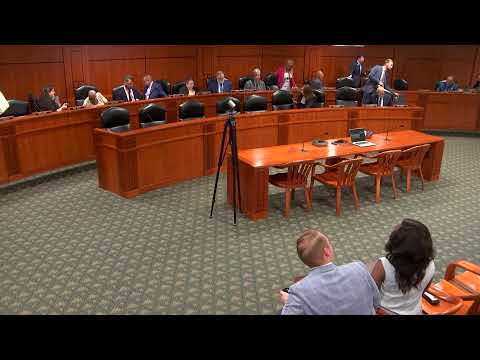
Committee hears testimony on bill to allow shoreline sandbags after 2020 high water; environmental groups oppose over microplastics and public‑trust concerns
Summary
Representative Andrews presented House Bill 48‑35 to let shoreline owners keep certain sandbag erosion controls placed during the 2020 high‑water event without a temporary EGLE permit if they meet material and siting requirements.
Representative Andrews told the House Committee on Natural Resource Insurance that House Bill 48‑35 would let shoreline property owners on the Great Lakes and Lake St. Clair leave “soft erosion control structures” (sandbags) in place without a temporary EGLE permit if the structures meet conditions intended to reduce environmental harm.
Andrews, the bill sponsor, described the 2020 high‑water event as the impetus: “the high water levels that we had in 2020.” He said many homeowners placed large sandbags to hold dunes during that crisis and that removing buried sandbags can be more disruptive and costly than leaving them in place. Andrews told the committee the bill would limit the exemption to Great Lakes and Lake St. Clair shorelines, require materials that are biodegradable or meet specified material limits (for example, the draft allows certain soft permeable synthetic textile materials that “contain no more than 4% carbon black and do not contain BPA”), require installation consistent with manufacturer instructions, and require property owners to notify the Department of Environment, Great Lakes, and Energy (EGLE) in writing with contact information and a physical description of the installation before or shortly after installation.
Under the proposal, a soft erosion control structure may remain in place provided it does not impede walkability on the shoreline during ordinary water levels, the majority of the structure is covered and not exposed or showing signs of degradation, and it does not extend into the water. Andrews said hard revetments and rock armoring would still require regular permitting and that the bill includes an allowance to replace a soft structure with a permitted hard wall where an operational septic system is at risk.
Committee members raised enforcement and rulemaking concerns. Representative Vanderwall urged legislative involvement in any later rulemaking and asked whether EGLE or local governments would be the primary enforcer; the sponsor said EGLE would have primary enforcement for Great Lakes issues but local governments retain some citation authority and the draft language would be tightened in subcommittee to clarify enforcement. Representative Preston asked about insurance coverage and noted many homeowners lacked flood or homeowner insurance for this type of loss; Representative Rose of Saint Clair and others emphasized the cost and difficulty faced by older or low‑income homeowners when asked to remove buried sandbags.
Environmental groups testified in opposition. Emily Smith and Samantha Pickering of the Michigan Environmental Council told the committee they “do oppose this bill for a few reasons,” citing the public trust doctrine, the 1963 Michigan Constitution’s conservation provisions, and the Department of Environment, Great Lakes, and Energy’s mission to protect water resources. They said the bill would “prioritize land owners rights over public access rights,” and raised scientific and health concerns about plastics. In testimony they argued that many so‑called biodegradable materials and bioplastics do not degrade in shoreline conditions and instead fragment into microplastics, citing studies and Great Lakes microplastic surveys. They urged retention of EGLE’s permitting process to protect public access and aquatic resources.
Representatives noted EGLE had sent an opposition message to the committee during the hearing. Multiple organizations filed written opposition cards (including the Michigan Environmental Council, Alliance for the Great Lakes, Sierra Club of Michigan, Huron River Watershed Council, Michigan Microplastics Coalition, and Michigan League of Conservation Voters). Support cards were filed by some local landowners and municipalities (for example, the city of Douglas) and by state legislators in concept.
No committee vote on House Bill 48‑35 was taken during this session; sponsors and committee members said they expected to work with EGLE and local governments in a subcommittee or drafting process to clarify enforcement, material definitions (for example, defining “biodegradable” and the permissible synthetic textile limits), and interaction with local ordinances before any vote.
The committee recorded public comment cards and testimony for the record and moved on after hearing from the sponsor, multiple committee members, and two named witnesses for the Michigan Environmental Council.