Get Full Government Meeting Transcripts, Videos, & Alerts Forever!
Get email alerts on the Mdot Section 107 Design Engineering topic
No spam. Unsubscribe anytime.
House appropriations subcommittee presses MDOT for detailed breakdown of Section 107 design and engineering budget
Summary
Michigan Department of Transportation officials outlined MDOT’s organizational structure and the scope of Section 107 (design and engineering services) as the committee sought more detailed dollar-level breakdowns, consultant-use data and follow-up documents on projects, federal funding and contracts.
The Michigan House Appropriations Subcommittee on State and Local Transportation heard a briefing from Michigan Department of Transportation officials on Section 107 of the transportation budget — the department’s appropriation for design and engineering services — and pressed MDOT for more detailed, dollar-level information on how the agency spends federal and state funds.
MDOT Bureau of Development Director Demetrius "Dee" Parker and Patrick McCarthy of the Bureau of Finance and Administration described MDOT’s structure, the role of regional offices and Transportation Service Centers (TSCs), and how staff and consultants split design and construction engineering work. Parker said Section 107 supports roughly 1,600 full‑time positions and covers “capital construction, development, TSC offices, welcome stations, rest areas, regional offices” and other program areas.
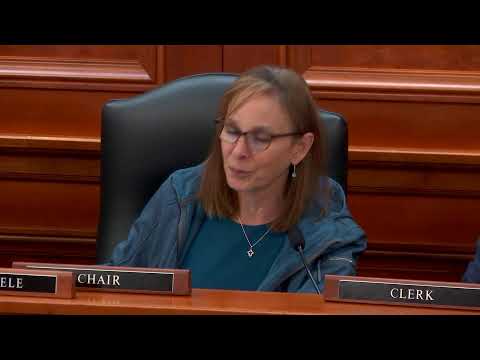
The committee sought specifics because Section 107 is a major portion of MDOT’s budget and the appropriation language must be tied to dollar figures. Chair Representative Steele and members repeatedly asked for a clearer mapping from the appropriation bill and the state accounting system (Sigma) to actual charges, including how much federal funding flows into TSC operations, design, in‑house work and consultant contracts. McCarthy said the Sigma accounting entries correlate to the appropriation lines and offered to provide a Sigma-based report showing how those costs post into the appropriation bill: “The numbers that you were mentioning are the appropriation numbers that are in Sigma…that’s how those post into what started out in the appropriation bill,” he said.
Committee members pressed MDOT on multiple operational topics. Representative Borton raised the choice of cement types used in projects and whether state manufacturers were being disadvantaged when MDOT approved an alternate product; Parker took the question and agreed to return with an answer. Representative Morgan asked for a concrete, on‑the‑ground explanation of what program development and delivery (PDD) FTEs do in a specific region; Parker described resident engineers, assistant engineers, construction technicians, development staff, bridge and materials engineers and surveyors assigned across TSCs and regional offices.
MDOT officials outlined the agency’s organizational footprint: seven regions, 22 Transportation Service Centers, and responsibilities for approximately 9,600 miles of state trunklines (out of about 22,000 road miles statewide) and roughly 4,800 bridges that MDOT oversees. Parker said local agencies—83 county road agencies and 531 cities and villages—manage the remainder of the state’s roads and bridges. The department reported using consultants for a substantial share of work: “60% of the projects that we deliver, we have consultants that do the work” for design, with the remainder handled in‑house, and roughly a 55/45 split for construction engineering depending on region and resource availability.
Lawmakers asked about coordination with local agencies on construction scheduling and detours. Parker said regions and TSCs hold annual coordination meetings with local partners and that MDOT tries to avoid sequential detours; where local roads take diverted traffic, MDOT and the local agency typically coordinate cost and, where necessary, pavement rehabilitation: “We actually did pave Blackman Road, because they allowed significant traffic onto their local road,” he said.
Members also asked about how MDOT handles buried utilities during reconstruction. Parker said decisions about replacing water mains or sewers are made on a project‑by‑project basis and depend on ownership and condition; locals sometimes share costs if they want upsized mains. On the I‑75 public–private partnership, Parker confirmed that the private partner financed construction up front and MDOT makes scheduled “availability payments” over a multi‑decade contract rather than issuing traditional bonds.
Committee members asked for follow‑up material. MDOT agreed to provide: a Sigma-derived report tying federal and state appropriations to charges in Section 107; a list and dollar totals for major projects (including items in MDOT’s publicly posted five‑year construction plan); numbers on consultant vs. in‑house work; information about cement procurement and striping materials and contracts; and additional details on the I‑75 availability payment schedule.
Votes at a glance: Representative Borton moved to adopt the minutes of the May 21 meeting; the motion prevailed by unanimous consent, with no roll‑call vote recorded.
The committee recessed after directing MDOT to return with the requested breakdowns and documentary evidence that map appropriation lines to actual expenditures.