Get Full Government Meeting Transcripts, Videos, & Alerts Forever!
Get email alerts on the Cfcc Funding Fair Overview topic
No spam. Unsubscribe anytime.
State and federal agencies outline grants, loans and technical assistance at CFCC virtual funding fair
Summary
State and federal funding agencies on the CFCC spring funding fair’s virtual platform summarized current grant and loan programs and next steps for communities seeking infrastructure financing.
State and federal funding agencies on the CFCC spring funding fair’s virtual platform summarized current grants, loans and technical-assistance programs and next steps for communities seeking infrastructure financing.
The event, hosted by Sarissa Hartwell of the State Water Resources Control Board’s Division of Financial Assistance, brought presentations from the California State Library, Department of Water Resources, California Infrastructure and Economic Development Bank (IBank), State Water Resources Control Board, Strategic Growth Council, Rural Community Assistance Corporation (RCAC), Cal OES, U.S. Bureau of Reclamation, U.S. Department of Agriculture (USDA) programs, and the U.S. Environmental Protection Agency’s brownfields program. Organizers opened virtual “booths” and breakout rooms for agency-specific follow-up.
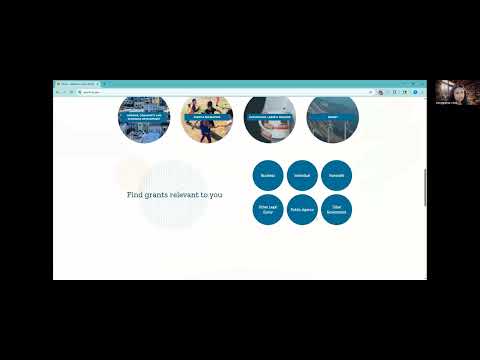
The fair matters because several programs have active solicitations or near-term deadlines, and the presentations condensed eligibility, application portals and contact points. For example, the California Grants Portal (grants.ca.gov) was presented as a central searchable index that state agencies are required by AB 2252 to populate; the Strategic Growth Council said its Affordable Housing and Sustainable Communities (AHSC) round closes May 28; and Cal OES announced a Hazard Mitigation Grant Program notice-of-interest window with a May 29 deadline for HMGP submissions.
Presenters emphasized where to find application materials and the limits of local authority. Shivani of the California State Library described the grants portal as a “central place for all eligible grant opportunities” that includes forecasted and active funding and supports filtering by applicant type and category. “The definition of a grant for the grants portal that the state agencies follow is anything that is competitive, first come, first served, including loans and federal assistance funds,” Shivani said.
Department-specific highlights presented at the fair included:
- Department of Water Resources: Gabriel Edwards said most DWR programs require public or local-agency applicants (tribes and certified nonprofits may be eligible) and that the current active DWR grant was the Riverine Stewardship Program, with $6,480,000 available for projects such as habitat restoration, fish-passage work and riverine conveyance improvements that must be consistent with Water Code section 79205.6.
- IBank: Lydia Workman described IBank’s infrastructure financing, noting a $1,000,000 minimum loan, a $65,000,000 per-project maximum, terms up to 30 years, a 1% origination fee (financeable), and flexibility to finance public infrastructure (not housing) on publicly owned land. Workman encouraged water and sanitation districts to discuss projects in breakout rooms.
- State Water Resources Control Board: Ybayan Rivera summarized wastewater, drinking water and site-cleanup funding programs, including state revolving funds, grants for small and disadvantaged communities, interim drinking-water solutions (bottled water, hauled water, point-of-use/entry systems), lead service line inventory/replacement programs, and technical-assistance offerings. Rivera highlighted the FAST (Financial Assistance Submittal Tool) portal as the application interface for many programs.
- Strategic Growth Council (SGC): Adrienne Moretz reviewed SGC signature programs including AHSC (funded from the Greenhouse Gas Reduction Fund), the Sustainable Agricultural Lands Conservation program (SALC), a factory-built housing predevelopment fund (currently under reassessment), community resilience centers and tribal capacity-building set-asides. Moretz said the current AHSC round being discussed closes May 28 and is for approximately $775 million in that round.
- RCAC: Mike Archer described RCAC’s technical-assistance and loan programs for rural communities (eligible communities are generally under 50,000 population and primarily serve low-income communities). RCAC highlighted bridge loans to cover contractor payments while awaiting reimbursements, short-term draw periods, rate-study assistance and other on-site technical support.
- Cal OES: Mateo Rodriguez summarized federally funded hazard-mitigation programs that Cal OES helps local governments access, including HMGP (Hazard Mitigation Grant Program), BRIC, FMA, PDM and emergency assistance. Rodriguez noted that the HMGP notice-of-interest was due May 29 and emphasized that HMGP carries a 25% nonfederal cost share (local match) when FEMA obligates grants under the Robert T. Stafford Act.
- Federal funding and technical-assistance guidance: David White (Bureau of Reclamation) walked attendees through grants.gov and Reclamation/WaterSMART funding streams, highlighting that most federal NOFOs include eligibility, scoring criteria and contact points, and reminding applicants that NEPA compliance is required after award. USDA representatives described Water and Waste Disposal loans and grants (eligibility for jurisdictions under 10,000 population, loan/grant combos to keep user rates affordable, and programs such as Emergency Community Water Assistance Grants and predevelopment planning grants) and USDA Community Facilities staff listed eligible CF projects (hospitals, clinics, fire stations, school facilities) and typical terms.
- EPA Brownfields: An EPA representative outlined free technical-assistance via targeted brownfields assessments (phase I/II), competitive assessment grants (community-wide, coalition, or state/tribe awards), cleanup grants and job-training grants. The EPA rep noted previous award amounts (assessment grants up to $1.5–2.0 million for coalitions/states; cleanup grants in prior rounds ranged up to $4 million) and that targeted assessments are available on a rolling basis.
Speakers repeatedly urged applicants to: read NOFO instructions closely; use the California Grants Portal and agency web pages for program-specific guidance; account for environmental review timelines (NEPA and, where applicable, CEQA); and contact agency program officers or join the announced breakout rooms for one-on-one follow up. David White cautioned attendees that NEPA typically adds time after award: “Most likely, receiving a NEPA compliance for your project will take a minimum of 3 months from the time you receive your award letter.”
The fair closed with the host reminding attendees that presentation slides and a recording would be posted on the CFCC website and that agency staff had opened virtual booths for follow-up questions. Organizers also posted an evaluation link and encouraged attendees to return for agency breakout rooms.
Less-critical details or next steps: specific funding rounds and submission windows vary by program; attendees were advised to subscribe to individual agency lists, use the CFCC handbook and grants portal for updated deadlines and to seek technical-assistance for disadvantaged or small systems.