Get Full Government Meeting Transcripts, Videos, & Alerts Forever!
Get email alerts on the Judicial topic
No spam. Unsubscribe anytime.
Appellate panel hears sufficiency challenge to Jeffrey Wayne Dean’s burglary and firearm convictions
Summary
On appeal, defense counsel argued the trial evidence was insufficient to support convictions for aggravated burglary and felon in possession of a firearm, citing intoxication and lack of proof of requisite intent; the state countered that the record supported the jury’s verdicts. The court took the arguments and said it would issue an opinion.
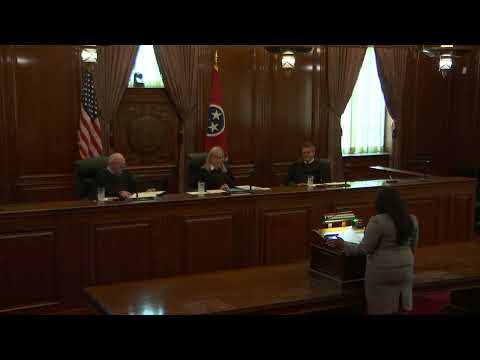
Raven Pria Morris, an attorney from the Appellate Division of the Public Defender's Conference, told an appellate panel that the evidence at trial was “insufficient to sustain mister Dean's convictions for aggravated burglary and felon in possession of a firearm.” She asked the court to reduce the aggravated burglary conviction to criminal trespass of a habitation, vacate the firearm conviction, or, alternatively, remand for a new sentencing hearing.
The question before the panel, Morris said, was whether the state proved the culpable mental states required for both offenses given evidence that Mr. Jeffrey Wayne Dean was intoxicated and displayed unusual behavior when officers arrived. “As a matter of law, the proof presented at trial does not support that” he entered the residence “with the intent of committing a theft,” Morris argued, citing officers’ testimony, body-worn camera footage, and an interrogation video as the record evidence the jury heard.
The state, represented by Ben Ball, replied that the record supported the convictions. “The evidence is sufficient to support the defendant's convictions for aggravated burglary and for the firearm conviction,” Ball said, pointing to the defendant’s presence inside the home, piles of the homeowners’ possessions found around the house, and the removal of a pistol from a zippered case. Ball also noted the jury found Mr. Dean committed a theft inside the home when he ate a Pop-Tart the state said he took.
At the hearing Morris highlighted several specific facts from the trial record to argue lack of intent: officers testified they believed Mr. Dean was under the influence; one officer described that belief on the officer’s body‑worn camera; Mr. Dean moved items inside the home, hung the homeowners’ wind chimes on the front porch, selected clothes and hung them outside the shower to wear after a shower, and ate a Pop‑Tart. Morris said the pistol had been in a zipped case inside a drawer and was later found on the floor. She argued those behaviors fit a pattern of someone who believed they had permission to be in the residence rather than someone who entered with a preexisting intent to steal and that the mental‑state element for both aggravated burglary and knowing possession of a firearm was therefore not proven.
The state urged the panel to defer to the jury’s credibility determinations and pointed to facts it said supported intent: the defendant was found inside the home, there were “little piles of possessions” as if someone were collecting items to take with them, and the defendant removed the pistol from its case. Ball argued a jury could reasonably conclude Mr. Dean intended to take items and that intoxication testimony in the record did not necessarily negate the required mens rea.
Counsel debated legal standards for possession, with Morris invoking State v. Shaw in arguing that actual possession required proof of knowing, direct physical control and that Mr. Dean’s brief handling of the firearm while rifling through a drawer did not establish the necessary knowing control. Morris characterized the state witnesses’ descriptions of Mr. Dean’s demeanor, the bodycam footage, and his interrogation statements as evidence of impaired mental capacity. Ball and the state responded that the record showed moments of control and actions consistent with an intent to possess or remove valuable items.
The panel did not announce a decision from the bench. The court said it would issue an opinion addressing the arguments raised on sufficiency of the evidence and sentencing.
Background: The appeal challenges convictions entered at trial for aggravated burglary and felon in possession of a firearm. Counsel on appeal debated whether evidence of intoxication and the defendant’s conduct inside the residence required reversal or reduction of the burglary conviction and vacatur of the firearm conviction, or whether the jury’s verdicts should be affirmed.