Get Full Government Meeting Transcripts, Videos, & Alerts Forever!
Get email alerts on the Criminal Appeal Reckless Endangerment topic
No spam. Unsubscribe anytime.
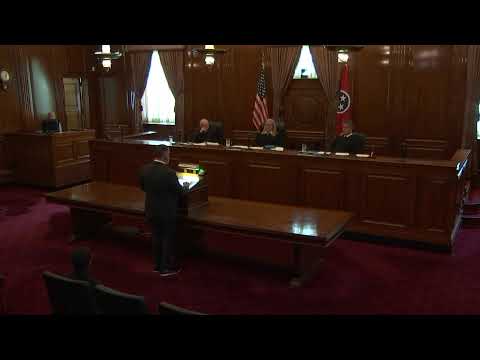
Appellate panel hears challenge to "zone of danger" evidence and six‑month jail term in Price case
Summary
An appellate court heard arguments over whether evidence sufficed to support a reckless‑endangerment conviction based on the "zone of danger" doctrine and whether a six‑month jail term within a two‑year sentence was excessive, with defense counsel arguing insufficient evidence and the state pointing to a second motorcycle and high speed.
An appellate panel heard oral argument over whether the evidence was sufficient to support a reckless‑endangerment conviction and a six‑month jail term imposed on defendant Mr. Price.
The issue central to the hearing was the so‑called "zone of danger" standard for reckless endangerment and whether testimony from Officer Mulligan and Lieutenant Springer established that other people were placed in imminent danger. Defense counsel argued the state’s evidence was insufficient; Ben Ball, attorney for the state, said testimony that two motorcycles were side by side and that one traveled well over the posted limit established the required risk.
Defense counsel (unnamed) told the panel, “This case really, I think, comes down to the, the zone of danger argument in the reckless endangerment charge and subsequent conviction,” and emphasized that Officer Mulligan “did not make visual contact with mister Price again after he spun, turned his blue lights on, spun his cruiser around.” Counsel said the officer “never gave us timing, never gave us distance, anything of those 2 motorcycles,” and argued that without additional witness testimony the officer’s account was insufficient: “I felt officer Mulligan's testimony was insufficient on its own.” Counsel also argued testimony from Lieutenant Springer was more prejudicial than probative because it described another motorist and could be imputed to Price, and urged the court to rule in favor of the defendant.
Ben Ball, attorney for the state, argued the record supported the conviction. Ball said the officer initially observed two motorcycles side by side and that the second motorcycle’s presence helps establish a zone of danger: “When he first observed them, they were both, exceeding the speed limit heading up to this blind turn. They were side by side, and that alone establishes a zone of danger.” Ball also summarized Mulligan’s testimony about speed and road conditions, saying the officer placed speeds well above the posted 45‑mph limit and described the stretch as normally busy at that hour.
The panel asked several questions about what the trial court may have relied on in sentencing. As counsel acknowledged, the trial judge imposed a sentence within the statutory range and cited the defendant’s prior criminal history and the seriousness of the offense; defense counsel characterized the resulting six months of confinement (to be served as part of a two‑year sentence) as harsh given that more serious charges were dismissed at trial. Ball pointed to the defendant’s prior failed attempt at judicial diversion as a factor counseling against another alternative sentence.
Participants also discussed visibility on the roadway where the events occurred; testimony was described in argument as involving a rise and limited visibility as the motorcycles approached an egress or turn. Both sides debated whether Mulligan’s testimony about typical traffic and his method for estimating speed provided sufficient factual detail about conditions that day.
The panel did not announce a decision at the hearing.