Get Full Government Meeting Transcripts, Videos, & Alerts Forever!
Get email alerts on the Search Warrant Probable Cause topic
No spam. Unsubscribe anytime.
Appellate panel hears whether anonymous tip and odor justified search warrant in State v. Cummings
Summary
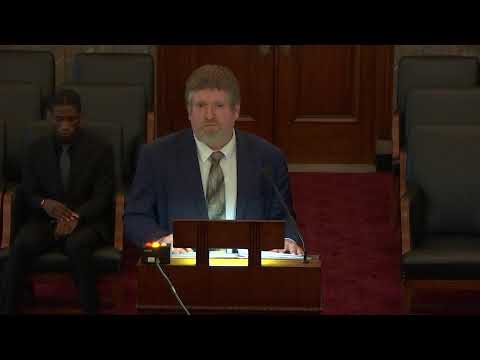
An appellate panel in Middle Tennessee heard oral argument in State of Tennessee v. Cedric Darnell Cummings over whether police had probable cause to obtain a search warrant based on an anonymous tip, officers’ report of smelling marijuana at the defendant’s residence, and a prior conviction.
An appellate panel in Middle Tennessee heard oral argument in State of Tennessee v. Cedric Darnell Cummings over whether police had probable cause to obtain a search warrant based on an anonymous tip, officers’ report of smelling marijuana at the defendant’s residence, and a prior conviction. Drew Justice argued for the appellant; Ronald Coleman argued for the state. The panel took the arguments under advisement and did not rule at the hearing.
The question being pressed to the court arose after the trial judge excised one affidavit ground — the officers’ report that they smelled hemp or marijuana at the back door — and found probable cause based on the remaining three grounds. Justice told the panel, “there was no probable cause to support the search in this case because the 3 grounds the trial judge used to sustain probable cause were all basically just too vague and or unsubstantiated.” He argued the anonymous tip failed to include the defendant’s address or predictive details and that, after the Tennessee Supreme Court’s decision in State v. Green, the smell of hemp or marijuana alone does not supply probable cause.
Justice urged the court to view the affidavit as lacking even reasonable suspicion in light of U.S. Supreme Court precedents he cited, including Alabama v. White and Florida v. JL. He stressed that the affidavit did not explain how officers tied the anonymous tip to a particular house, noting that the record’s only explicit statement is a form line reading that the residence was “5870 Summitville Road” followed by the defendant’s name and a date of birth. He quoted the Tennessee Supreme Court precedent Aguilar v. Texas and the Tennessee case the defense relied on for the presumption-of-reliability principle, and warned against making magistrates “a rubber stamp for the police.”
The state countered that the certified-question procedural argument under Rule 37 could justify dismissal but, on the merits, urged application of the totality-of-the-circumstances test. Coleman argued the anonymous tip included insider details — “possession of numerous vacuum sealed bags containing marijuana, crack cocaine, cocaine, numerous firearms, a large amount of cash in a safe in the bedroom” — and that officers went to the specific residence and smelled marijuana when they pulled into the driveway. Coleman told the panel courts may draw rational inferences from the affidavit and that those facts, taken together with the defendant’s criminal history, supported probable cause under Illinois v. Gates.
Several judges pressed both advocates on a critical nexus question: how the magistrate could conclude the tip applied to that particular house. One judge asked directly, “How do we know that this is his home?” and warned about the real-world danger of officers going to the wrong residence. The state conceded the affidavit “could have been bolstered” and that the facts placed the case close to the line, but argued the magistrate may permissibly draw a rational inference that the officers knew the defendant’s address when they drove to the property.
The parties also disputed standards: the defense emphasized that some U.S. Supreme Court cases allow an anonymous tip to support only reasonable suspicion absent predictive detail, while the state relied on Gates and Tennessee authority that ask courts to evaluate the affidavit’s facts in combination. The defense noted the Tennessee Supreme Court’s State v. Green ruling limiting smell-based probable cause principles and urged reversal of the denial of suppression; the state urged dismissal of the appeal for an alleged Rule 37 defect or, alternatively, affirmance of the suppression ruling.
The panel did not issue an immediate decision. After argument, the court moved on to the next case and reserved ruling. Any appellate opinion will determine whether the magistrate’s probable-cause finding — after the trial court excised the odor-based ground — can stand on the remaining facts and rational inferences shown in the affidavit.