Get Full Government Meeting Transcripts, Videos, & Alerts Forever!
Get email alerts on the Evidence Appeal Stasher topic
No spam. Unsubscribe anytime.
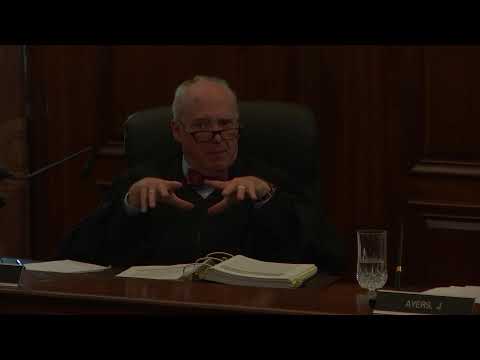
Tennessee appellate court hears challenge to admission of prior gun and drug evidence in Stasher trial
Summary
An appellate panel in Tennessee heard arguments over whether a trial court improperly admitted prior-conduct evidence and convictions in the gun-possession trial of the defendant, Mr. Stasher.
An appellate panel in Tennessee heard arguments over whether a trial court improperly admitted prior-conduct evidence and convictions in the gun-possession trial of the defendant, Mr. Stasher.
Defense counsel argued the trial court erred by admitting three categories of evidence — a 2014 firearm conviction, a 2019 narcotics conviction that the state introduced to show felon status, and testimony about a charged-only weapon incident from February 2018 — saying the material was unfairly prejudicial and exceeded the narrow purposes allowed under Tennessee Rules of Evidence 404(b), 609 and 608.
The issue matters because the contested evidence was introduced near the end of the state’s case and during cross-examination, the defense argued, and the state called a detective to testify in detail about the unconvicted 2018 incident. Defense counsel told the court, “there are really 3 rules at issue here. So we have rule 404(b), rule 609, and then rule 608.” He said both the 2014 conviction and the charged-but-not-convicted 2018 conduct were “substantially similar, if not identical” to the charged offense and therefore more prejudicial than probative.
At oral argument the defense emphasized several points: the trial was not conducted in a bifurcated manner (the state introduced the 2019 conviction as substantive proof that Stasher was a felon rather than stipulating to that fact before trial); the charged-only 2018 incident never resulted in a conviction and therefore should not have been proven with extrinsic testimony; and the jury heard detailed detective testimony about the 2018 stop and the alleged weapon. The defense argued the 608/609 impeachment framework was not satisfied because the 2018 charge was not a conviction and the 2014 firearm offense bears little on veracity. Counsel said the combination of those three pieces of testimony and exhibits created a risk the jury convicted on propensity rather than the facts of the charged stop.
The state, represented by Garrett Ward, defended the trial court’s rulings. Ward said the defendant put his history with police at issue on the stand and that his testimony advanced two central defenses: (1) that the gun belonged to his brother and therefore was not the defendant’s, and (2) that the stop was another instance of racial profiling by the Cookeville Police Department. Ward argued the 2019 conviction had been introduced without objection as exhibit 3 to prove felon status and that the 2018 charged conduct was permissible to show absence of mistake and to rebut the defendant’s broader narrative about police conduct.
Ward described the case facts emphasized by the state: the defendant was driving the vehicle when officers saw a gun handle protruding from under the driver’s seat. Ward said that visible positioning is particularly strong evidence of possession and argued the combination of eyewitness observation and the defendant’s testimony made the admission of the prior incidents less likely to be reversible error. He acknowledged other ways the state might have presented evidence but urged that a reasonable trial court could have admitted the prior-act evidence under Rule 404(b) for the non-propensity purpose of showing absence of mistake.
Both sides also debated harmless-error analysis. The defense argued the detailed detective testimony about the charged-only 2018 incident came late in the trial, was one of the last things jurors heard, and therefore could not be viewed as harmless. The state countered that the visible gun under the driver’s seat and the totality of the evidence make it unlikely the contested testimony changed the jury’s verdict.
Several factual clarifications were stated on the record during argument: the 2019 narcotics conviction was introduced in the state’s case-in-chief (the parties did not object at that time); a certified copy of the 2014 firearm conviction was admitted; the 2018 weapons matter was charged but did not result in conviction; a detective (Detective Anderson) testified about the 2018 stop; the defendant’s brother testified at trial and claimed the firearm as his; and a 15-year-old passenger, the defendant’s son, was in the vehicle at the time of the charged stop. Counsel also noted that the trial court conducted jury-out hearings and expressly found a relevance/purpose (the court stated the prior conduct related to intent or absence of mistake).
No decision was issued at argument. The appellate panel took the matter under advisement after oral argument. The parties asked the court either to affirm the conviction or to remand for a new trial or vacate convictions depending on how the court resolves the search and evidentiary issues.
The record cited in argument includes pretrial hearings about the admissibility of the prior acts, the trial transcript showing the defendant’s testimony about prior encounters with police, defense and state exhibits including a certified judgment (exhibit 3) for the 2019 conviction, and testimony from Detective Anderson about the 2018 charged conduct.
Additional participants identified in the oral argument included Judge Campbell, Judge Hixson and Judge Jackson on the panel, Detective Anderson and Officer Cannon as witnesses referenced in the record, and attorneys for both sides. The court did not announce a timetable for a written opinion at the hearing.