Get Full Government Meeting Transcripts, Videos, & Alerts Forever!
Get email alerts on the Property Taxes topic
No spam. Unsubscribe anytime.
Lee County property appraiser: Fort Myers Beach taxable value up about 3% as repairs return properties to the roll
Summary
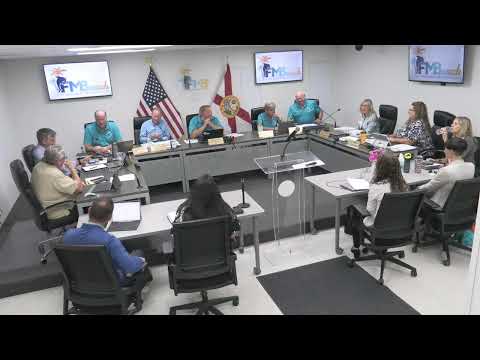
Lee County Property Appraiser Matt Caldwell told Fort Myers Beach council members the town's early estimates show a roughly 3% increase in taxable value year over year, driven by properties returning to the tax roll after storm repairs and some new construction.
Matt Caldwell, Lee County property appraiser, gave council members an early look at the office's June 1 topline numbers for the county and Fort Myers Beach. Caldwell said the town's taxable value rose roughly 3% year over year in the preliminary release; the office will publish its final, refined numbers July 1 for budget-making use.
Caldwell said the apparent increase masks a change in market values: objective (just) market value in some areas is down about 2.5%. The reason the taxable line for Fort Myers Beach looks stronger, he said, is that many properties that were previously off the roll or capped because of storm-related damage have been repaired and returned to the tax roll.
"You had about $860 million in the new-construction line," Caldwell told the council, referring to the combination of true new construction and properties returning to the roll. "The taxable result of that was about $167 million coming back on the roll." He cautioned that the market overall is normalizing after the intense pandemic years and that future direction remains uncertain.
Caldwell also reviewed how post-storm rebuilding interacts with tax rules. He said properties rebuilt after a storm may appear to jump in assessed value compared with pre-storm tax rolls because market demand and land values have shifted. Homeowners concerned about whether their rebuilt property will qualify as substantial improvement for FEMA or insurance purposes were encouraged to secure independent private appraisals, which Calder said the FEMA guidebook lists as the preferred method for resolving 50%-rule questions.
Caldwell noted the county's appraisal system remains intentionally favorable to property owners to limit overtaxation and litigation; mass appraisals for tax rolls will generally produce values that differ from an individualized market appraisal. He advised residents undergoing major reconstruction to obtain a private appraisal to document values for FEMA, insurance, or other needs.
The council asked about how turnover of ownership after Hurricane Ian affected the town tax base. Caldwell said each transfer resets the taxable value to full just value in the first year after sale, so turnover has helped recover taxable totals after the storm-induced drops. When council members asked about the time to full recovery, Caldwell said some communities affected by major storms historically recovered over multiple years and suggested a reasonable planning horizon of about five years, while noting market and broader economic forces would affect that timeline.
Why it matters: The preliminary numbers will be used for budget planning; the final figures on July 1 will be the official numbers the town uses for its fiscal planning. Caldwell's briefing underlined that storm recovery has shifted the mix of taxable properties, and that short-term year-to-year comparatives can reflect both market movement and the return of previously damaged properties to taxable status.
Ending: The county property appraiser's office will continue parcel-level refinement over the summer and send the trim notices later in August; council members said they appreciated the early briefing ahead of the town budget process.