Get Full Government Meeting Transcripts, Videos, & Alerts Forever!
Get email alerts on the Renewable Energy Permitting topic
No spam. Unsubscribe anytime.
Iroquois County committee reviews multiple solar applications, requires three supplemental items before deeming complete
Summary
County advisors said Lewis Creek and three community solar applications contain most required materials but must provide contact lists, Soil & Water submission confirmation and road-authority notice before the committee will forward them to the Zoning Board of Appeals and county board.
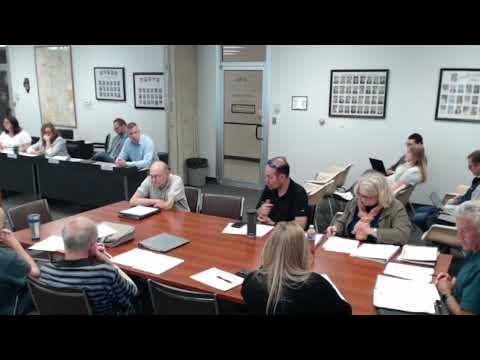
Iroquois County officials reviewed multiple solar and battery storage applications on June 3, with external legal and engineering advisers telling the committee the filings are largely complete but missing a few routine items.
The committee’s external legal adviser, Andrew Kite, said the Lewis Creek project — a combined solar-plus-battery application — paid the county fee and supplied most required documents but still needs three items: contact information for participating landowners, confirmation that the applicant submitted the package to the Soil and Water Conservation District as required by the Soil and Water Conservation District Act, and proof the local road authorities have been given the application for comment.
Those three items, Kite said, are simple to provide and can be verified by staff. “They can provide that information pretty quickly in terms of saying, hey, we’ve provided it to Soil and Water, and here’s the contact information,” Kite said. He and county engineering adviser Scott Durvicki recommended staff verify those submittals once they arrive and then notify the committee so the project can move forward to public hearing.
Why it matters: Under the county’s permitting sequence, the committee reviews whether an application is administratively complete, the Zoning Board of Appeals (ZBA) holds the public hearing and makes findings, and the county board makes the final decision. Several applicants filed before the county’s updated ordinance took effect; staff said the applications will still follow the same statutorily required steps but the county can attach conditions at the board stage.
Adviser Scott Durvicki said his technical review identified a few documentation gaps and at least one screening variance the applicant already appears aware of. He described the committee review as “high level” and said final engineering and building-permit details will come later if the entitlement process completes.
Developers and staff also discussed timing and statutory requirements. Kite noted the Agricultural Impact Mitigation Agreement (AIMA) must be fully executed by the time of the public hearing under state law; applicants told the committee they had submitted the AIMA to the Department of Agriculture and were awaiting the state’s execution. Soil and Water, Kite added, has 30 days after receipt to issue its Natural Resource Inventory to the county.
The committee set June 17 for ZBA hearings on three community solar projects that were submitted before the county’s ordinance took effect and asked staff to circulate updated application packets to local governments and road authorities. Committee members agreed to reconvene quickly — including calling a special meeting if needed — to act as soon as the missing items arrive so the county can meet applicants’ requested timelines.
The discussion also covered related process items: a variance is a separate application and hearing (frequently scheduled on the same night as the special-use hearing if the applicant files in time), contact information for participating landowners can be submitted to staff under separate cover for confidentiality, and FAA review is required for any tower or structure above the ordinance’s threshold.