
District presents Community-Based Transition Center serving students with disabilities; program offers work placements and services through age 22
Get AI-powered insights, summaries, and transcripts
Subscribe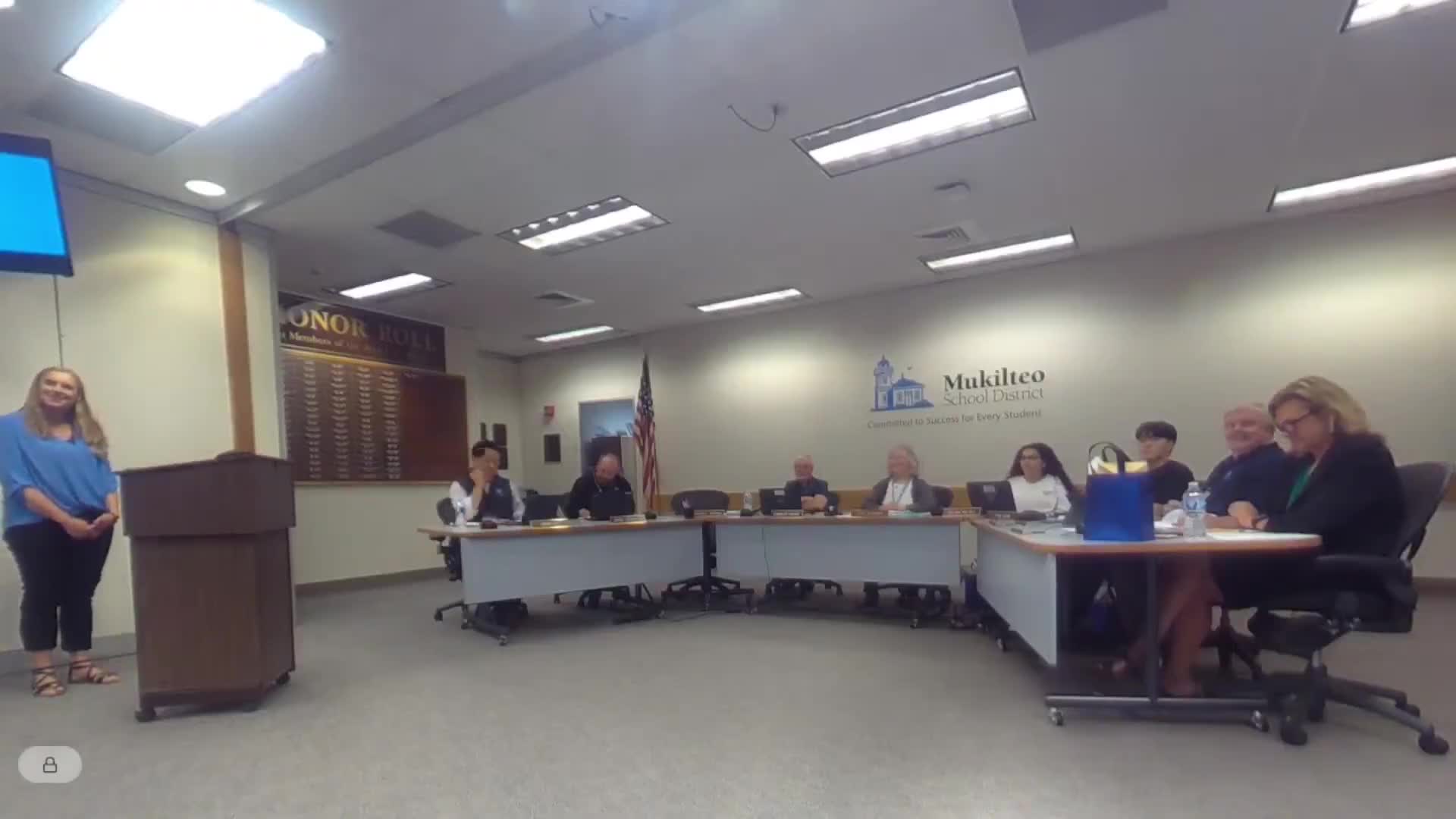
Summary
Mukilteo School District staff described the Community-Based Transition Center (CVTC), which serves roughly 40–50 students with disabilities, provides work placements and independent-living skills and now serves students through age 22 following a recent state change.
Mukilteo School District staff presented the Community-Based Transition Center (CVTC) during the May 27 board meeting, describing services that prepare students with disabilities for independent community life after high school.
A district presenter (staff member) introduced teachers Julie and Kim, who said CVTC serves “over 40 students” this year and expects more next year. The program, based at the Teaching and Learning Center, provides individualized transition services: job placements in community businesses, daily-living skills (cooking, laundry, money management), leisure activities, and linkages to community agencies such as the Division of Vocational Rehabilitation (DVR) and Developmental Disabilities Administration (DDA).
Staff said a recent state change extended eligibility so that students may now receive services until they turn 22 (previously the district provided services through the year a student turned 20). The program uses community partners including restaurants, retail stores and local manufacturers to create tailored internship and vocational experiences. Staff described examples: students prepping food in a commercial kitchen, working in retail at Old Navy, assisting in technology tasks (laptop disassembly) and precise manufacturing tasks at a local firm.
Why it matters: CVTC supports students with disabilities to gain employment, independent-living and community-participation skills. The program’s expansion to age 22 aligns district services with state eligibility and affects transition planning for families and IEP teams.
Context and supporting details: Staff emphasized that CVTC operates as a service model (“transition is a service, not a place”), provides shortened-day schedules for some participants, and coordinates with IEP teams at district high schools to create individualized plans. Staff noted that community partnerships are essential and that some students already held meaningful employment, requiring schedule adjustments.
Board response and next steps: Board members asked about referral pathways and how students enter CVTC; staff said students are typically referred from district structured learning and Lighthouse programs and that families visit the program before placement. No formal board action occurred; the presentation served as program information and an update.
Ending: Staff said they will continue collaborating with families, community employers and district teams to broaden internship options and support successful post-school outcomes for CVTC students.