Get Full Government Meeting Transcripts, Videos, & Alerts Forever!
Get email alerts on the Industrial Capacity And Geopolitics topic
No spam. Unsubscribe anytime.
Executive branch official warns U.S. industrial decline is a national security risk
Summary
At an American Compass event, Bernie Moreno said decades of offshoring and lost manufacturing capacity have created supply-chain vulnerabilities that constrain U.S. foreign-policy options and national security.
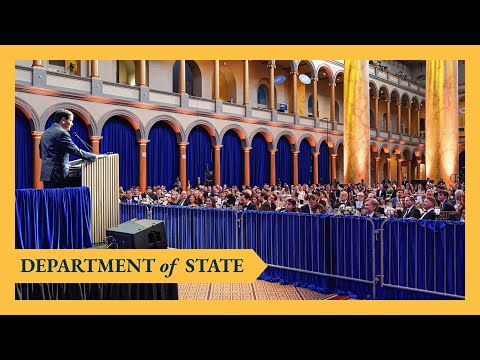
Bernie Moreno, an executive branch official and guest speaker at an American Compass event, said declining U.S. industrial capacity and concentrated foreign supply chains have become a strategic vulnerability that must be corrected.
Moreno said the loss of domestic manufacturing and processing for critical materials and pharmaceuticals limits America’s ability to act abroad and undermines long-term economic resilience. "Industrial capacity mattered in terms of national security, and that's never changed," he said.
Why it matters: Moreno argued that decades of policy decisions that prioritized global efficiency over domestic industrial capacity left the United States dependent on foreign producers for key parts and materials. He singled out rare earth processing and pharmaceutical active ingredients as examples, saying many countries now position themselves as sources of those inputs while a small number of nations control much of the processing and refining capacity.
Moreno said the U.S. and other countries misjudged the permanence of post–Cold War globalization and that conceding production capacity "robbed the nation of its industrial capacity" with economic and security consequences. He noted that some goods are now produced in places where suppliers are willing to accept short-term losses to dominate markets, and that dependence can be used as leverage in geopolitical disputes.
On supply chains and pharmaceuticals, Moreno said a large share of active pharmaceutical ingredients and generics come from a small number of foreign producers — "80-something percent," he said — and that the United States must rebuild processing and manufacturing capability or diversify suppliers to avoid being constrained during crises.
Moreno also linked the industrial argument to broader foreign-policy priorities. He said recent administrations erred by subordinating national interest to what was perceived as good for the global economy, and that the United States should again put its national interest at the top of foreign-policy decisions. He described efforts in the current administration to reorient economic and foreign policy toward that goal, calling it a long-term project.
Moreno drew on historical examples to underline his point, referencing U.S. industrial strength during World War II and arguing that production capacity — not merely technology — underpinned wartime advantage. He recalled personal details about his confirmation to his current role and said that experience has deepened his view of limits imposed by existing statutes and supply dependencies. "Who the hell wrote these laws?" he said, criticizing procedural and statutory constraints on quick executive action.
Moreno closed his remarks by praising American Compass for its work on these issues and introduced Vice President JD Vance to speak to the audience.
No formal motions or votes were taken during this speech; the session consisted of remarks and an introduction.