Get Full Government Meeting Transcripts, Videos, & Alerts Forever!
Get email alerts on the Economic Development Downtown topic
No spam. Unsubscribe anytime.
Downtown Memphis Commission urges steady budget, expands clean-and-safe contract to boost downtown recovery
Summary
The Downtown Memphis Commission presented its FY26 operating budget and a $2.9 million contract for a 40-person Clean/Green/Safety team, stressing beautification, safety and incentives as tools to spur private development in the downtown core.
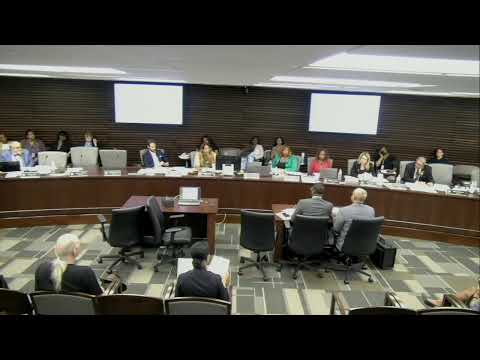
Shandell Ryan, president and CEO of the Downtown Memphis Commission, told the Memphis City Council at a budget wrap-up hearing that DMC’s FY26 spending plan aims to accelerate downtown recovery by investing in public safety, cleanliness and hospitality. "The quickest way to change people's experiences is by having beautification on steroids," Ryan said, summarizing the agency’s approach to drawing visitors and businesses back to the core.
The DMC said its FY26 budget will rely primarily on a downtown commercial-property assessment (the CBID/CBIT assessment) and additional grants and transfers; Ryan said the assessment is expected to generate about $4.7 million and that total FY26 revenues for DMC are projected at roughly $5.9 million. The board also presented audited financial records and an organizational overview of four affiliated entities that handle incentives, financing and parking operations.
Nut graf: DMC officials told council members the agency is using a mix of incentives, grants and a new contract for cleaning and hospitality to address vacancies and perceptions of unsafety that have reduced visitation and private investment downtown. The commission said targeted public improvements and incentive programs have historically leveraged private investment several times greater than the incentive dollars spent.
Most of the presentation focused on three near-term items: a $2.9 million contract to expand a Clean/Green/Safety team (DMC expects to staff 40 workers under the contract, up from about 35), ongoing façade and exterior-improvement incentive programs managed by a nonprofit CCDC affiliate, and ongoing litigation and blight-reduction work (Ryan said DMC is currently engaged in 11 active cases). Ryan highlighted recent catalytic projects DMC supported and argued more large-scale transformative projects will be needed to fully revitalize the downtown core.
On parking, Ryan said DMC manages six public garages and recently took a $4.2 million loan to address deferred maintenance; the commission has pilot pricing and seasonal $5 special-parking promotions to reduce barriers to downtown visits. Penelope Springer, DMC chief financial officer, provided comparisons showing that downtown budgets in peer cities often have different funding mixes and larger per‑downtown-dollar resources.
Council members pressed DMC on boundaries for incentive (pilot) programs, placement of pilot districts and eligibility; Ryan said the DMC service area (the CCRFC/CBID boundary) was established by ordinance and generally extends to the parkways. Members also asked whether DMC would directly fund public toilets; Ryan said there is no current line item for public restrooms but that the commission would like to explore models used by other cities and add the idea to future grant/pilot conditions.
Council members also asked about programs to help small and emerging developers. Ryan described the Emerging Developers program, an education and networking program run by DMC’s MDEV arm, and said the program is free and has placed several participants into downtown projects. "They will learn from seasoned developers," Ryan said.
The DMC presentation included examples of prior leverage: Ryan showed a slide saying roughly $1.6 million of incentives in 2023 helped catalyze about $15 million of private investment and cited later-year examples where incentive dollars were smaller relative to total project investment. Ryan described the DMC’s affiliated entities that issue PILOTs and administer design review, and noted DMC’s design review board recently updated signage guidelines after public input.
Ending: The council heard the presentation and asked follow-up questions but no formal city budget vote on DMC’s FY26 budget was recorded during the session. Officials indicated they will continue working with council members on specifics and on coordinating incentives and city partners to attract larger, transformative projects to the downtown core.