Get Full Government Meeting Transcripts, Videos, & Alerts Forever!
Get email alerts on the Fence Ordinance topic
No spam. Unsubscribe anytime.
Planning commission approves expanding allowed site-obscuring fence materials, tables detailed ordinance edits
Summary
The commission voted to recommend expanding the definition of ‘‘site-obscuring fence’’ to allow additional materials (including vinyl) and removed a strict masonry/composite-only requirement for PUDs; it tabled other technical language and engineering-standard changes for staff revision.
The planning commission voted to recommend broadening the city’s definition of “site-obscuring fence” to permit materials beyond masonry and factory-inserted privacy slats, including vinyl, and removed a PUD-specific requirement restricting side-obscuring fences to masonry or composite.
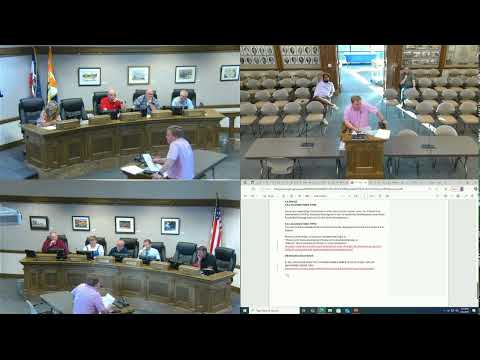
Tyler Melling, representing Cottonwood Hollow LLC and several PUD interests, asked the commission to add vinyl to the list of acceptable materials for site-obscuring fence because masonry can be substantially more expensive and vinyl products and composites have improved in durability. “We’re asking for vinyl to be added to that,” Melling told commissioners. Planning staff and commissioners discussed alternative drafting approaches: (a) list permitted materials explicitly (e.g., masonry, Trex, vinyl, wood), or (b) define a functional standard (a material or construction that limits vision to a specified percentage) and allow materials that meet that standard.
Commissioners agreed to broaden the allowable materials for site-obscuring fences and approved a motion to recommend the ordinance amendment to city council. Commissioners also asked staff to reconcile and edit related engineering standards so ordinance text and engineering details are consistent. Separate parts of the proposed changes—such as rules for fences adjacent to public recreational amenities, headlight/light-mitigation language for parking areas, and detention-basin fencing—were discussed at length and tabled so staff could return with clearer, consolidated language. Commissioners flagged practical concerns including safety (retention basins), visibility for law enforcement and maintenance, and the city’s prior prohibition on barbed wire.
Highlights of the discussion and provisional direction: - The commission supported removing the PUD-only masonry/composite restriction and allowing alternative materials if they meet a site-obscuring functional test (percent of visual obstruction). Commissioners favored fixing inconsistencies between the zoning ordinance and engineering standards. - For parking-lot / headlight mitigation, staff proposed requiring a six-foot-high side-obscuring fence where headlights would otherwise shine onto residential properties; commissioners asked staff to refine the approach and consider grade differences and landscape setbacks. - For detention basins, staff noted the engineering detail referenced a 6-foot chain-link fence with barbed wire for city-maintained basins; commissioners asked staff to clarify ownership-based standards and said barbed wire should not be required for private basins that are landscaped or have high infiltration rates.
Outcome and next steps: The planning commission recommended approval of the definitional change allowing additional fence materials and forwarded that to city council. The commission tabled several technical subsections and asked staff to return with consolidated ordinance language and matching engineering standards for the next date-certain meeting.