Get Full Government Meeting Transcripts, Videos, & Alerts Forever!
Get email alerts on the Vesting Extension Development topic
No spam. Unsubscribe anytime.
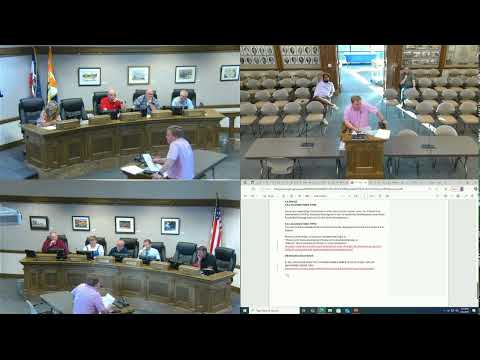
Commission debates vesting extension for Phase 4 subdivision; recommends one-year extension after concerns about master-plan road and frontage improvements
Summary
Developers asked the planning commission to extend vesting rights for a commercial/storage-phase subdivision approved in January 2023 but whose plat expired in January 2025; commissioners debated new ordinances requiring deeper remainder parcels, increased centerline radius, and master-plan road frontage, then recommended a one-year vesting ext.
Developers seeking a vesting extension for a Phase 4 subdivision that completed improvements after its two-year vesting window faced close questioning from Cedar City commissioners about changes in ordinances that would now prohibit parts of the same plan.
The applicant, represented at the hearing by the owner’s representative (Mister Jett) and discussed by staff, asked the commission to grant an extension after the plat expired in January 2025. Staff and commissioners noted the subdivision originally was approved in January 2023; improvements were completed in November (applicant’s account) but the plat recording occurred after the expiration. Staff said the city’s two-year recording deadline is intended to prevent projects from relying indefinitely on older standards.
Commissioners and staff identified three ordinance changes that affect the phase: a “public improvement avoidance” ordinance that prevents creating remainder parcels that dodge frontage improvements; a new minimum 200-foot depth requirement for remainder parcels; and updated engineering standards that require a larger centerline radius on curves (current standard 100 feet vs. the 30-foot curves on the plat). Staff told the commission the phase “would no longer meet” current ordinances without modifications, and that some lots would need to be expanded and the developer would have to build the frontage road improvements for master-plan road frontage.
Applicant’s position: The developer said construction was completed in November and cited costs and practical limits of retrofitting a pavement and full frontage improvements after building. The applicant proposed alternatives including storage-container use for the narrow remainder parcels and potential development agreements that would trigger future improvements, or amendments to the master plan and right-of-way width (for instance, narrowing a planned 66-foot right of way to 55 feet) to reduce takings and construction costs.
Commission deliberation and outcome: Commissioners discussed options including (1) denying the extension and forcing a full re-submittal under current standards; (2) granting a vesting extension (which would preserve the applicant’s prior entitlements); (3) pursuing a development agreement that phases frontage improvements to a future trigger; or (4) amending the master plan. Commissioners expressed concern that granting a blanket vesting extension would perpetuate a “loophole” the ordinance intended to close. Several members also said they would prefer a development agreement or master-plan amendment to avoid creating a narrow incomplete frontage the city would later maintain.
After extended discussion and site-condition questions (including traffic modeling, impacts on adjacent landlocked properties, and whether the city should consider alternative north–south routes such as 800 West), the commission first voted to table but then ultimately approved a positive recommendation for a one-year vesting extension to the city council, with differing views recorded from commissioners. The commission also directed the applicant to meet with city staff to negotiate a development agreement or bring alternative proposals (e.g., master-plan amendment, tiered improvements) for the commission’s reconsideration.
Why it matters: The decision balances the city’s objective to enforce newer subdivision standards against practical realities when improvements are already in place. The bill of particulars includes public-improvement obligations that could impose significant cost and design changes on the developer if the extension were denied.
Next steps: The commission’s one-year extension recommendation will be placed before Cedar City Council for final action; staff will work with the applicant on possible development-agreement language, traffic modeling, and master-plan amendment options.