
County outlines water, sewer fixes and reuse plans as it readies infrastructure for industry
Get AI-powered insights, summaries, and transcripts
Sign Up Free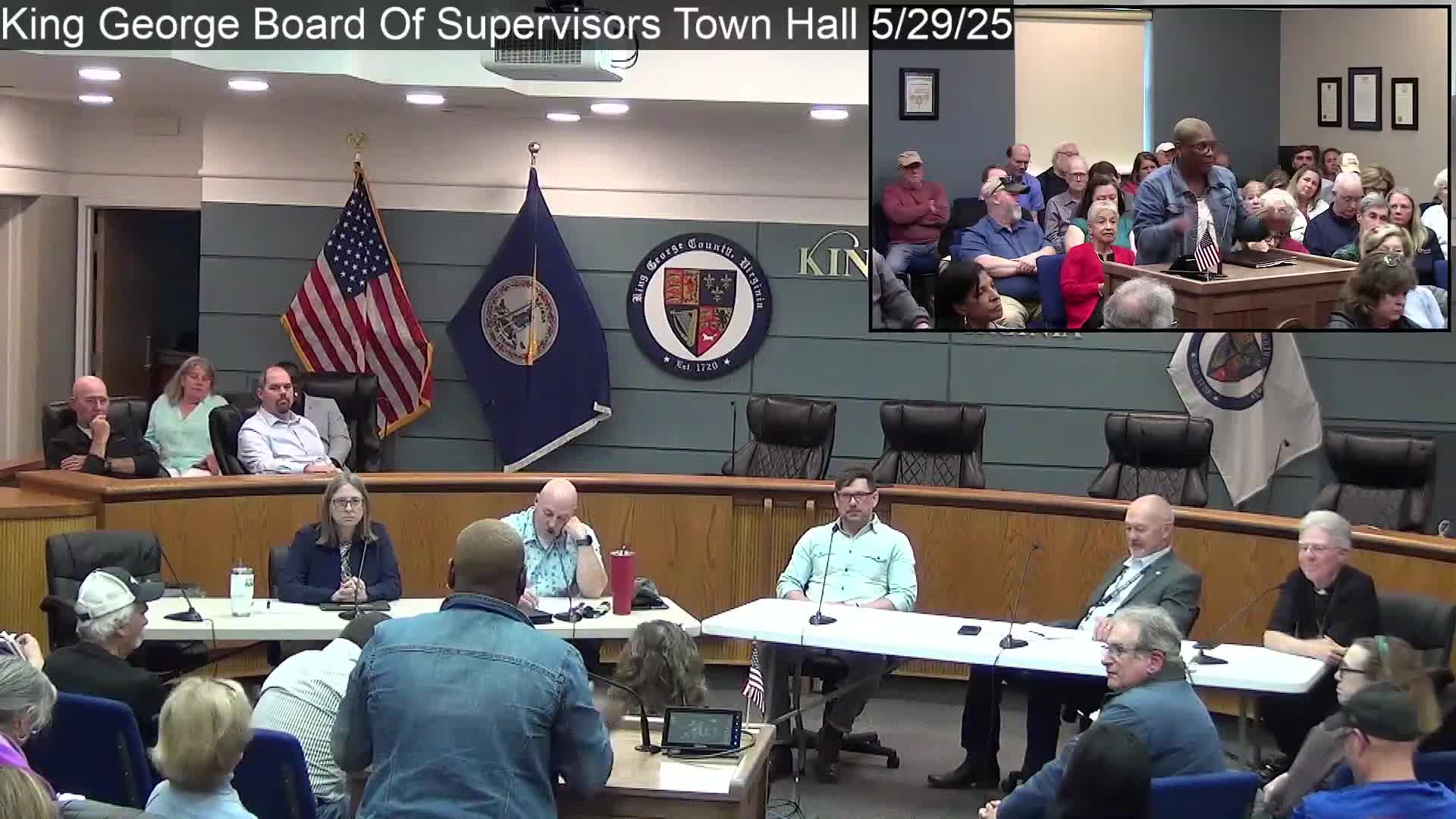
Summary
King George County officials described a year-and-a-half effort to stop regulatory fines at the service authority, laid out upgrades and decommissioning plans for aging plants, and discussed pilot reuse and metering programs as part of efforts to prepare for industrial users such as data centers while limiting rate impacts on customers.
King George County officials told residents at a town-hall meeting that the county has focused this year on stabilizing the Service Authority, repairing compliance problems and planning infrastructure upgrades that could support industrial users, including data centers.
The county described why the work matters: fixing repeated compliance violations and retiring older treatment plants should reduce recurring fines and operating costs and make the service more attractive to businesses that require large, reliable water and sewer systems.
County officials said they have spent the last year rebuilding relationships with the Virginia Department of Environmental Quality (DEQ), addressing violations and planning technical upgrades. They told residents the Dahlgren treatment plant needs additional upgrades so it can meet nutrient limits and — if funded and upgraded — could accept septage from haulers and support industrial reuse (“purple pipe”) for nonpotable uses. County staff also said Perkins Corner plant must be decommissioned by Jan. 1, 2027, and that doing so and consolidating systems should lower some long-term chemical and operating costs.
Officials said grant funding and federal COVID-era allocations secured by state lawmakers are paying for key projects. One state grant directed by the Virginia Department of Health paid for redundancy work connecting Canterbury and Circle to the courthouse to reduce outages, county officials said. Another tranche of state-allocated COVID funds was described as covering more extensive replacement line work from Perkins Corner through Hopyard to support the courthouse and other future connections.
The county said it is piloting an irrigation (outdoor) meter program, with a 10-home trial planned; officials said about 101 households had signed interest forms as of May 1. The pilot is intended to measure outdoor irrigation use separately from indoor water use and to inform billing or conservation programs.
Officials said they have been exploring “purple pipe” reuse arrangements to supply treated nonpotable water to industrial users. They explained those systems require pretreatment at the county plant, pretreatment at the industrial site and further treatment before returning flow to the system — steps that add cost but can create a revenue stream if the county sells reuse water to industrial customers.
Board members and staff said the county has reduced the pattern of fines by engaging DEQ and modifying operations; they described last year as the first in over a decade without a fine after the county began that work. County representatives also said they have been negotiating for a permanent general manager with experience in utilities and data-center infrastructure and that an experienced candidate was expected to respond to an offer imminently.
On funding, officials described a mix of grants and ARPA or state funds used to build lines and to decommission older plants, and said some grant reimbursements are handled via monthly or quarterly submissions. They warned that while some projects can generate revenue (for example by accepting septage or by selling reuse water), upgrades and pretreatment requirements involve upfront capital costs.
Officials urged patience on timing: regulatory approvals, easements from landowners and environmental permitting impose sequencing and legal requirements that add months to projects. They said the county has prioritized getting easements and has accelerated procurement and engineering compared with prior years.
Residents asked how the county would handle public-safety and fire-rescue impacts tied to industrial growth. Officials said that any equipment contributions from developers (for example, a donated ladder truck) also carry ongoing staffing and maintenance costs that the county would need to cover; those were described as separate budgetary decisions.
Ending: County officials said the immediate priority was to finish the technical fixes that stop fines and restore reliable service, then layer on projects that could produce revenue — but only after permitting, engineering, easements and funding were in place. They asked residents to follow board meeting agendas and the county’s online materials for detailed engineering reports to be presented at future board meetings.