Get Full Government Meeting Transcripts, Videos, & Alerts Forever!
Get email alerts on the Land Use topic
No spam. Unsubscribe anytime.
Cook County adopts open-space overlay to allow denser housing when half the land is conserved
Summary
Cook County Board of Commissioners voted unanimously May 27 to adopt amendments to county zoning and subdivision rules that create a Residential Open Space Overlay (ROSO), allowing qualifying properties to seek up to twice the usual residential density if at least 50% of the site is preserved as open space and other conditions are met.
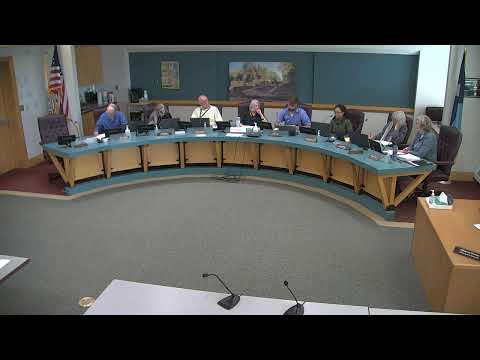
Cook County Board of Commissioners voted unanimously May 27 to adopt amendments to the county's zoning and subdivision ordinances that create a Residential Open Space Overlay (ROSO) intended to encourage new homes while preserving open space.
Planning staff told the board the change lets eligible properties apply for an overlay that can allow up to two times the usual residential lot density if at least 50% of the parcel is preserved as open space and other program conditions are met. Land services director Niva Nelson, who presented the proposal, said the change is intended to support new housing while protecting natural features and improving the approval process.
Nelson said the overlay is intended to be used selectively: properties would be eligible only in certain zone districts (referred to in the proposal as FAR 2 and FAR 3), on county, township or state roads, and generally outside a 1,000-foot buffer from lakes. She described the approval path as a two-step public process: a rezone/overlay public hearing followed by a preliminary-plat review where site-level suitability is tested, including septic siting and other technical limits. "This is just to convey that you can get up to 2 times the residential lot density," Nelson said when summarizing the rule as a ceiling rather than an automatic allowance.
The ordinance package also amends the subdivision code to clarify open-space subdivision rules, adds a requirement that final plats address wildfire resilience planning, and inserts more detailed language about developers' agreements so the county and a developer have a clearer checklist for conditions and financial assurances. Nelson said the proposed wildfire resilience language grew from a planning commission discussion and that county emergency manager Mike Keyport supported the requirement as a tool to align new plats with the county's Firewise and Community Wildfire Protection Plan work.
Public and stakeholder input was part of the record. Riley Barnhart, government affairs director for the Lake Superior Area Realtors Association, told commissioners the overlay "creates more opportunities for year round residents to build homes without compromising the environment," and urged adoption. Nelson said the Planning Commission held a public hearing on May 14 and unanimously recommended approval following three addenda and edits made after stakeholder feedback.
Board members emphasized the technical constraints that would still limit development. Commissioner Gamble noted that septic capacity, wetlands, steep slopes and rock outcrops often determine how many lots can actually be developed on a parcel; he said shared septic or cluster systems could sometimes make higher densities feasible but that the land often "drives suitability." Nelson confirmed that septic siting and soils would typically be a limiting factor evaluated at the preliminary-plat stage.
Commission discussion also highlighted local variations and examples discussed during review, including properties on Kramer Road and areas near Maple Hill and the Gunflint Trail where owners and neighbors had expressed interest in more flexible options under controlled conditions. Nelson said the overlay is voluntary: owners must apply and would receive at least two public hearings before any rezoning or plat approval.
Commissioner Gamble moved to adopt the amendments; the motion carried unanimously. The board's action applies the new overlay and the subdivision amendments to the county code; developers seeking the ROSO will still need to pursue site-specific rezones and preliminary plats under the new rules.
The new rules include the 50% open-space preservation standard, the up-to-2x density ceiling (to be applied case by case), a recommended wildfire resilience discussion or plan for final plats, and clarified developer's-agreement language. Nelson said staff will work with the county attorney and planners to prepare the forms and guidance that applicants will need for overlay petitions and preliminary plats.
What happens next: property owners who wish to use the ROSO must first seek the overlay rezone public hearing; if that is approved the preliminary plat review will evaluate technical feasibility, septic capacity and other site constraints. Nelson and the planning commission recommended the county monitor early projects and be prepared to refine the rules if practical issues arise during implementation.
The board recorded no separate budget commitments in the ordinance action; the measure changes land-use rules and approvals rather than immediately altering taxes or county budgets.