
County recycling program adds cameras, internet and site upgrades to cut costs and improve service
Get AI-powered insights, summaries, and transcripts
Subscribe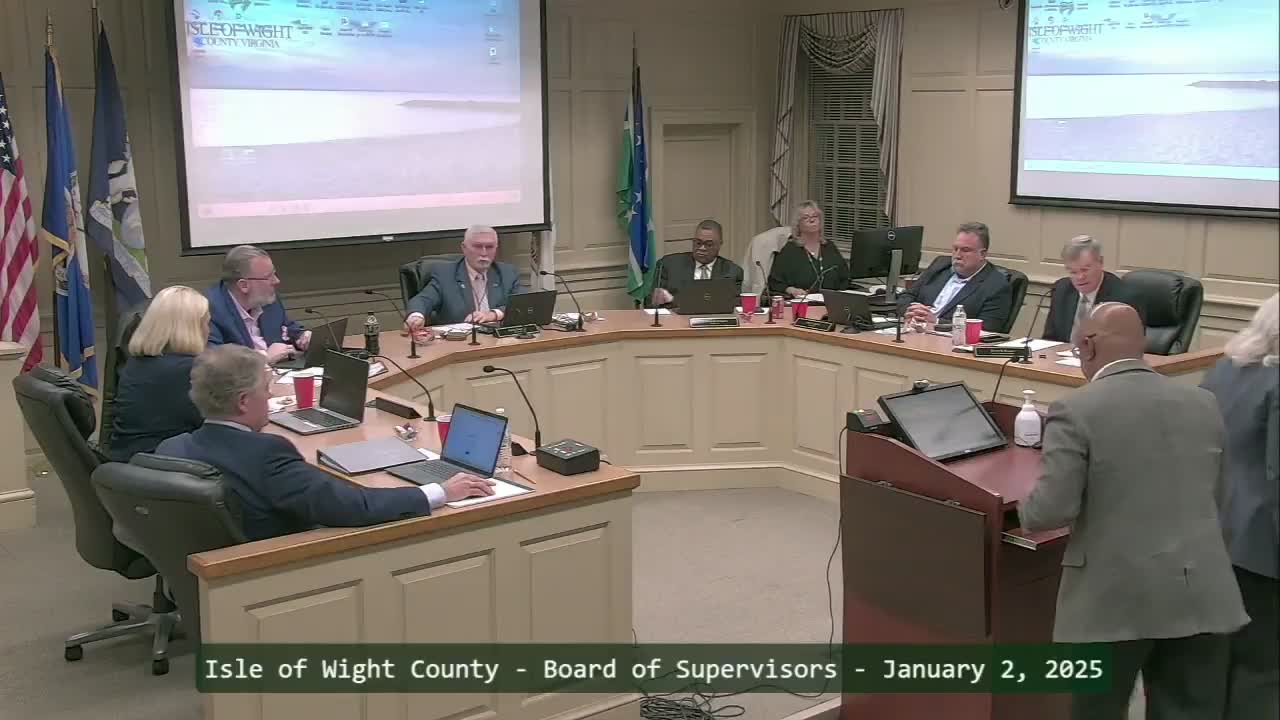
Summary
Refuse and recycling staff described new low‑cost internet and camera installations at eight convenience sites, traffic‑flow changes and proposed compactors aimed at reducing hauling and operational costs.
County refuse and recycling staff reported on recent operational upgrades and proposed investments aimed at improving safety, shortening site wait times and reducing hauling costs.
Michael Ethridge, who presented the update, said the division worked with county IT to install internet service and real‑time camera monitoring at eight convenience sites and that doing so cost the county far less than an early estimate. "When this project first started ... the cost to implement Internet at all of the sites was somewhere around 35,000," Ethridge said. "Fast forward to today, we were able to get all 8 sites for less than $800." He credited IT staff for negotiating lower costs and building the infrastructure in‑house.
The nut graf: staff said internet‑enabled cameras let supervisors and site managers view multiple sites in real time, speed detection of sites that are not opened on schedule, monitor traffic patterns and test layout changes without having to be on‑site. Ethridge said those changes already reduced congestion at Jones Creek after staff created a new lane and relocated a recycling compactor.
Ethridge also described data collection improvements that allow staff to capture traffic counts and tonnages from the field. Those measurements guide which sites get upgrades first; he said Jones Creek is the busiest with roughly 7,000 visits in the 2023 reporting period and that Carol Bridge and Staves Mill are the next candidates for directed improvements.
For smaller county‑operated and leased sites, Ethridge proposed installing self‑contained compactors and concrete pads to reduce open‑top container hauls. He said installing compactors at three smaller sites the county does not own (Camptown, Crocker and Walters) would dramatically cut annual hauls from about 800 to about 236, eliminating roughly 546 hauls per year. Ethridge presented a high‑level cost estimate: "This particular project right here for all 3 sites, concrete pad turnkey is about ... $150,000," and said the division budgeted roughly $150,000 for Camp Town and $150,000 for Carol Bridge while noting some installation costs for Staves Mill had already been incurred.
Board members asked about whether closing underused sites would be preferable to investing in upgrades. Ethridge said consolidation can make sense from a pure operations cost perspective but also flagged rural access considerations: some residents travel short local distances by trailer or lawnmower to the nearest site and closing a site could create hardship for those users. He said staff prioritized improvements that kept sites open while increasing efficiency.
Ethridge concluded by describing practical, low‑cost improvements already implemented at several sites: painted traffic arrows, lay‑down areas for bulky items so staff can load with machinery (reducing container counts and hauls), and relocation of compactor pads to permit two‑side service at sites. He said the division will propose phased investments to the county budget and that some smaller items can be completed with in‑house labor.
Ending: The board took no formal vote on the capital proposals at the meeting; staff said they will bring cost details and a phased proposal for consideration during the upcoming budget cycle.