Get Full Government Meeting Transcripts, Videos, & Alerts Forever!
Get email alerts on the Final Budget 2025 26 topic
No spam. Unsubscribe anytime.
Hatboro-Horsham proposes 3.46% real estate tax increase in final 2025–26 budget recommendation
Summary
Mister Stone presented the district’s final 2025–26 budget recommendation on June 2, proposing a 3.46% real estate tax increase and use of existing reserves; the administration will bring the full proposal to the board for a vote on June 16.
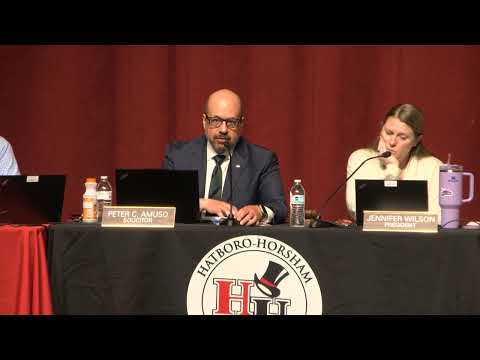
Mister Stone presented the Hatboro-Horsham School District’s final budget recommendation for 2025–26 at the June 2 work session and said the administration will bring the final proposal, including a real estate tax increase recommendation, to the board for a vote on June 16.
“We are recommending a real estate tax increase of 3.46%,” Mister Stone said, and added that the recommendation is below the state Act 1 index and continues the district’s multi-year strategy of limiting increases to at-or-below the index.
Mister Stone reported projected revenues of about $132,900,000 versus expenditures of about $135,900,000, leaving a pre-increase deficit of roughly $3,000,000 that the recommended millage change would eliminate. He said the recommended millage would move from the current 33.8 mills to 34.97 mills and that the budget proposal includes using existing reserves: $2,000,000 from unassigned fund balance and $1,250,000 from the district fund noted in the presentation.
To illustrate taxpayer impact, Mister Stone provided example monthly increases under the proposed rate: a property at the 25th percentile assessed value (~$118,000) would see a monthly increase of about $7.61; a median-assessed home (~$148,000) about $10.64 per month; and a property at the 75th percentile (~$212,000) about $16.78 per month (calculations assume eligibility for the homestead/farmstead credit).
The presentation included several routine fiscal recommendations that will appear on the June 16 agenda: adoption of the real estate tax increase and deadlines, a homestead/farmstead credit resolution (the presentation listed the projected credit at about $494.25 per eligible homestead), continuation of the senior citizen property tax rebate program (district matches 50% of the state rebate for eligible seniors) and a proposed new district rebate to match Montgomery County’s volunteer tax credit for active emergency-service volunteers. Mister Stone said the district had identified eight volunteers for the program so far and noted the county program grew to 109 individuals receiving rebates totaling $33,272 in 2024–25.
Mister Stone also summarized other annual items: recommended categories of committed fund balance as required by GASB, continuation of purchasing cooperatives for competitively procured goods and services, and insurance renewals (he estimated coverages would increase by roughly $75,000 next year due to broader market losses, while cyber liability decreased slightly).
Board members asked about how the Act 1 limit is calculated, the sustainability of using fund balance, whether the recommended tax increase includes program cuts (Stone said it did not), and how the district ranks versus peers in Montgomery County (Stone said he will include comparative data in the June 16 package). The presentation and budget documents will be included on the June 16 legislative action agenda for board consideration and vote.