Spokane County officials ask board for funds after state cuts truancy program
Summary
County staff and juvenile-court-affiliated departments told commissioners the state’s decision to cut roughly 70% of BECCA-related funding will reduce local truancy services unless the county steps in to cover the gap.
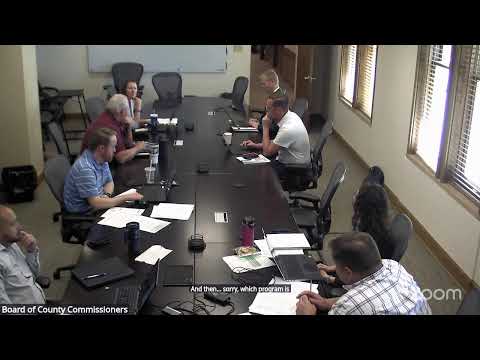
Spokane County officials asked the Board of County Commissioners on June 2 to consider one-time and ongoing funding to replace state money for truancy and related early‑intervention services after the Legislature and agencies reduced BECCA‑related allocations.
The request follows a statewide reduction that removed about 70% of funding that had supported regional BECCA (truancy/intervention) services. County staff said the state cut about $900,000 that previously flowed to the county and that, under current formulas, Spokane County could expect roughly $420,000 annually from the re‑scaled state pool unless the county supplements the remainder.
Why it matters: County presenters said the local network of case managers, court staff and service providers forms an “ecosystem” of prevention and case management. They warned that a significant cut would force layoffs, lower case management capacity and reduce service dollars that help keep youth engaged in school. County staff asked the board to consider covering part of the gap for the remainder of 2025 and to set expectations for next year’s budget.
What was presented: County staff described three funding options discussed with juvenile‑court and partner departments: (1) replace the full $900,000 annually to maintain current staffing and services; (2) a 20% reduction scenario that would require roughly $720,000 annually from the county to make up the difference; and (3) a 30% reduction scenario that would require roughly $630,000. Using last year’s numbers, staff estimated a midline available state allocation of about $420,000. For the remainder of fiscal 2025 (six months) staff requested $382,000 to maintain services while departments plan next steps.
Operational impact: Several department heads said most program costs are staff salaries and that a 30% reduction would likely force the loss of one or more case managers, clerks and support staff across departments. One court administrator said the county would likely be able to keep one case manager on duty but would serve “a fifth of the kids” currently reached. Departments said staff who perform case management, clerking and judicial support would be affected and that layoffs would follow union rules for notice when necessary.
Legal and policy context: Staff briefed commissioners that House Bill 2044 — a session bill that would have altered state processing priorities — did not pass, and that state statutes (referred to in testimony as RCWs governing BECCA/truancy filings) still require schools, in many circumstances, to file petitions. Presenters said the state took the policy decision to deprioritize funding for truancy interventions even though the statutory filing framework remains unchanged.
Next steps and board direction: Commissioners discussed options including (a) using county general funds for part of 2025 to maintain services through a planned transition; (b) pushing the state via coordinated regional advocacy and communicating the budgetary impacts; and (c) working with school districts and other partners to triage case intake by priority while capacity is reduced. Staff were asked to return with a more detailed budget figure for the board to act on and to outline how reduced funding would translate into concrete staffing and service changes by program and month.
Discussion vs. decision: The board did not approve funding during the June 2 meeting. Commissioners expressed concern and signaled willingness to consider covering part of the gap in the short term while seeking state action, but asked staff for clearer, department‑level scenarios and costed staffing plans before a formal decision.
Ending: Staff emphasized the immediate operational need — children currently in programming, court schedules and union notice requirements — and asked the board for a near‑term decision so departments can plan staffing and school communications. The board asked staff to come back quickly with refined numbers and impacts for formal action in the coming weeks.
AI generated
The text on this page is AI generated. Summaries, highlights, analysis, and video transcripts are all produced from the original source material.
AI can make mistakes, so if you spot one, and we will fix it for everyone.
Note: the source content is unaltered by us. Any content source we link to, be it a video, an audio recording, or a document, is presented exactly as its publisher released it. That publisher is usually a government body, sometimes an individual official or another organisation.