Get Full Government Meeting Transcripts, Videos, & Alerts Forever!
Get email alerts on the Ethics topic
No spam. Unsubscribe anytime.
Villa Rica council weighs major changes to ethics ordinance after complaint hearings
Summary
City attorney told council that recent complaints exposed gaps in the city’s ethics process, and councilmembers debated whether to reform the ordinance, keep it, or pause complaints while revisions are drafted.
City attorney Kevin Drummond told the Villa Rica City Council on Monday that the city’s ethics ordinance and the panel created to enforce it have proven difficult to use and may need revision after several rounds of complaints and a hearing process.
Drummond said the recent filings showed problems with how complaints are submitted and screened: “It wasn’t submitted under oath, and it’s not an ethics complaint until you submit a document under oath,” he said, describing staff and the ethics panel’s effort to create a standardized complaint form and procedures to improve clarity.
The issue matters because the ordinance, as written, gives the ethics panel limited enforcement power and has produced costly processes that staff and councilmembers said drain city resources. Drummond noted the city incurred additional expense when a complainant filed a related lawsuit in Douglas County, and he said the panel’s multiple meetings and a hearing used significant staff time.
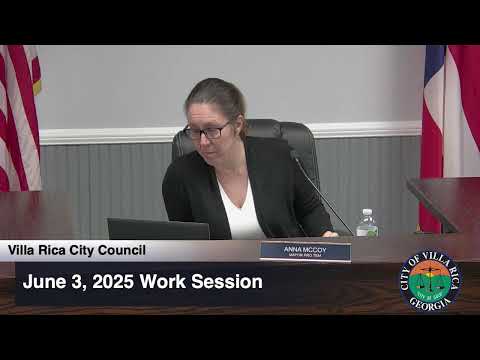
Councilmembers debated three broad options: keep the ordinance as written and enforce it; revise the ordinance to tighten procedures, membership, and remedies; or repeal it and rely on existing civil or criminal pathways. Councilwoman McCoy, who said an ethics complaint had been filed against her the previous day, argued for improvements rather than elimination. “I still wanna maintain the position that I don’t think we should do away with this board. I think we should probably improve it,” she said.
Specific topics discussed included: - A standardized complaint form and a preliminary “frivolity” review so the panel can return incomplete or unfocused filings; Drummond said the panel had adopted such a form after reviewing an earlier complaint that was “all over the place.” - Board composition and perceived impartiality, including whether members should be appointed by councilmembers (similar to planning and zoning) or whether an attorney should be included on the board to advise on legal questions. - Potential sanctions or fee-shifting for frivolous complaints so respondents could recover attorneys’ fees in rare cases where complaints are baseless; Drummond said some cities allow attorney-fee recovery or monetary penalties for frivolous filings. - The limited legal “teeth” of a municipal ethics panel: Drummond noted civil or criminal avenues (for example, a bribery charge or a civil suit to set aside a contract) remain available even without an ethics board, and that some remedies (removal from office) would require a separate legal process.
Councilmembers expressed concern about cost to taxpayers, the burden on volunteers who serve on boards, and the optics of eliminating a public venue for complaints. Several members proposed a hybrid solution: require each councilmember to appoint a board member but assign three-member panels to hear individual complaints, and add a formal prehearing review to weed out incomplete filings.
Drummond said he will draft alternative ordinance language and circulate versions for council feedback, and at least one councilmember asked staff to add an agenda item to place a moratorium on complaints until changes are drafted. No formal ordinance change was adopted at the meeting; council direction was to return options and draft language for further review.
Ending: Councilmembers did not take a final vote on the ordinance. Staff was asked to prepare draft revisions to the city’s ethics ordinance—addressing complaint form standards, board composition, preliminary review procedures, and potential remedies—and to circulate versions for council consideration. A moratorium on new complaints was suggested for inclusion on the next meeting agenda.