Get Full Government Meeting Transcripts, Videos, & Alerts Forever!
Get email alerts on the Sanitation Fee topic
No spam. Unsubscribe anytime.
Lebanon council approves $20 monthly sanitation fee and adopts 2025-26 budget
Summary
After hours of public comment, the Lebanon City Council voted to create a dedicated sanitation fund funded by a $20 monthly fee and approved the city’s fiscal 2025-26 budget, which includes roughly $3.9 million in employee pay increases.
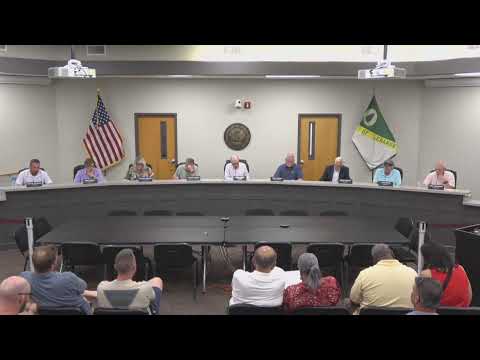
The Lebanon City Council on a voice and roll-call vote approved a new $20 monthly sanitation fee and adopted the fiscal year 2025-26 budget after an extended public-comment period and debate among council members.
The sanitation fee — cited by city officials as necessary to cover sharply rising landfill tipping fees and other sanitation costs — will be collected separately from the city’s general fund to make the sanitation operation self-supporting, Mayor Bell said. “I really think the work they do is worth $4.61 a week,” the mayor said, referring to the per-household cost represented by the $20 monthly fee.
Councilors and staff said the fee responds to recent cost increases. The city’s sanitation budget was about $2,060,000 in 2020; officials presented an estimate that the sanitation budget could be about $4,100,000 in the coming year. Landfill tipping fees were reported as roughly $382,000 in 2020 and are projected at about $1,600,000 in the upcoming budget, figures Mayor Bell cited during the meeting. Regina Santana, the city’s utilities director, added that the city’s fiscal year runs July 1 to June 30 and that a new sanitation fund would fund the department moving forward.
Members of the public urged the council to consider alternatives and exemptions before adopting the fee. Janice Frizzell, a commercial property owner, asked, “What will this fee be used for? Can commercial locations opt out of this because I pay for a dumpster, which only cost me a hundred and $80 a month?” Alex Buehler, a longtime resident and former councilor, urged the council to allow opt-outs for private communities and to examine sidewalk and right-of-way maintenance concerns. Several speakers, including Luis Martinez and Andy Van Schaake, said the monthly charge would be burdensome for residents on fixed incomes and asked whether the city had exhausted other options, such as negotiating landfill contracts.
City staff and councilors responded that landfill capacity and fees outside Wilson County had constrained options. “Middlepointe’s the landfill that we bring our trash to in Murfreesboro,” Santana said; she also said Wilson County’s landfill currently accepts construction debris only and is not open to the city’s municipal solid waste. Mayor Bell and other councilors said private haulers often cost more than the city’s proposed fee and that allowing unrestricted opt-outs would not materially reduce costs because trucks would still run routes and fixed costs would remain.
The fee was presented to the council as part of a package that also included the city’s annual budget. Councilors debated the broader budget, which contains roughly $3,900,000 in total employee pay increases recommended by a compensation study and included salary adjustments meant to improve retention in public safety and other departments. Councilor Camille Burdine said she supported employees but raised concerns about providing across-the-board market increases without performance components for all positions. Councilor Chris Crowell and others said the increases were necessary to retain trained staff.
On formal actions: the council took a voice vote to approve the sanitation ordinance (order number 257203). The council then voted by roll call to adopt the annual budget and tax rate for the fiscal year beginning July 1, 2025, and ending June 30, 2026 (order number 257222). The roll-call result recorded on the record was: Joy Carmack — yes; Jerry Ashley — no; Camille Burdine — no; Chris Crowell — yes; Tick Bryant — yes; Phil Moorhead — yes. The mayor announced the tally as 4 to 2 and declared the motion approved.
Councilors and staff said some implementation details will be handled administratively. Mayor Bell said he has instructed the finance commissioner to consider poverty-line exemptions and work on processes for residents in financial hardship. Santana said the city is also exploring a future transfer-station option once the current contract with Middlepointe expires and that the city will need to identify where to haul waste if the Murfreesboro landfill becomes unavailable.
Public commenters repeatedly asked whether the sanitation charge is a tax and whether residents who already contract with private haulers or who live in gated/mobile-home communities can opt out. Staff and the mayor said the city’s sanitation department does not pick up commercial dumpsters and that those properties would not be charged the residential sanitation fee. Officials acknowledged the concerns of residents on fixed incomes and said administrative relief options would be explored.
The council’s actions create a dedicated sanitation fund and lock the proposed budget into place for the coming fiscal year. Councilors said the measures are meant to stabilize sanitation service funding and avoid cuts to other city services, including police and fire, if the rising sanitation costs were instead absorbed by the general fund.