Get Full Government Meeting Transcripts, Videos, & Alerts Forever!
Get email alerts on the Fy26 Budget Personnel Cuts topic
No spam. Unsubscribe anytime.
Revere ways-and-means subcommittee outlines $1.26 million in proposed personnel cuts to narrow FY26 budget gap
Summary
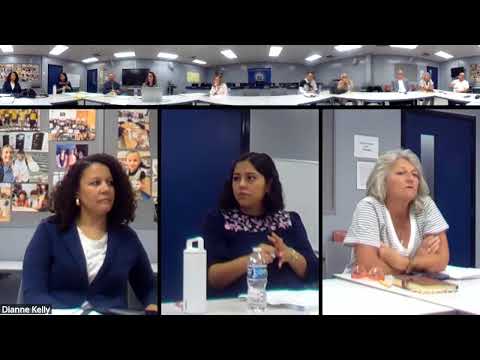
At a June 3 Ways & Means subcommittee meeting, Revere Public Schools administrators and committee members reviewed a package of proposed personnel reductions — totaling about $1.26 million — aimed at closing next year’s budget shortfall while prioritizing classroom teachers and class size.
Revere Public Schools’ Ways & Means subcommittee met June 3 to review a set of proposed personnel reductions and other budget adjustments intended to narrow a multi‑million dollar FY26 deficit and limit the district’s draw on reserves.
The administration presented roughly $1,260,000 in identified personnel cuts — mostly districtwide coaching and specialist roles and several instructional positions — and said those reductions would reduce the outstanding gap from about $3.47 million to approximately $2.2 million. Administration and committee members said they expect to use additional carryforward funds and an anticipated increase in state “circuit breaker” reimbursements to bring the remaining draw on district reserves down to about $1.7 million.
The proposal removes or pauses a range of positions, including two elementary special‑education coach positions, several district consulting teachers, a second elementary health teacher, one of two elementary adaptive physical education positions, two BCBA (behavior analyst) positions (reducing six to four), an unfilled middle‑school Spanish teacher line, a high‑school biology position identified for reduction based on enrollment, and the district civics coach (6–12) as a potential cut. The administration described many of those changes as temporary or “pausing” programs so that the licensed staff would return to classroom roles rather than be eliminated from the payroll.
"Classroom teachers to me is number 1," said Stacy Bronson Rizzo, chair, Ways & Means Subcommittee. "Class size is very important." Committee members repeatedly emphasized protecting classroom teaching positions and class sizes as their top priorities while discussing where reductions would be least harmful to instruction.
Superintendent Jonathan Kelly described the review process and principals’ input: "We have met with every single one of the principals. We have met with all of the curriculum directors, and we have looked through and debated and thought about what are the right moves that we can make to bring the budget into the realm." Kelly said principals told administrators which coaches and supports were indispensable and which were stretched thin by being split across multiple schools.
The administration estimated the current package of cuts represents about $1.26 million and would move the projected gap from $3,469,000 to roughly $2.2 million, leaving an approximately $474,000 shortfall to reach the subcommittee’s target of $1.734 million in total reductions. Business Administrator Matt Cruz and staff proposed two funding offsets: identifying an additional $250,000 in current‑year carryforward and counting on an expected increase in the state circuit‑breaker reimbursement rate (from the 75 percent assumed in this draft to an anticipated 90 percent) for roughly another $250,000. That combination, the administration said, would reduce the amount required from the district’s reserve to about $1.7 million.
Committee members pressed on specific programs and services. They discussed the district’s substitute‑teacher budget, which administrators said had grown significantly in recent years due to increased staff absenteeism and the need for long‑term licensed replacements when absences exceed 30 days — a requirement the administration identified as state law. The administration also noted the district’s use of long‑term substitutes who are hired onto contracts when coverage extends beyond short‑term needs.
Members asked detailed questions about special‑education staffing. Administrators proposed reducing two of six BCBA positions to four, and reducing licensed school psychologists from nine to seven in the FY26 draft. The superintendent and directors said some testing and evaluation work would otherwise be outsourced to private agencies, which the district has paid for in prior years. On nursing support, the administration said six nursing‑aide positions currently appear in the draft; committee members suggested alternatives, and the administration said it had not taken a formal vote to eliminate any of those positions and was exploring options.
Several members pushed back on cuts to positions they described as student‑facing, notably math and literacy coaches and other roles tied directly to MCAS preparation and school accountability. Administrators repeatedly said principals had identified math and literacy coaches as indispensable and that proposed reductions targeted roles principals described as least harmful to students given current enrollment and service levels.
The subcommittee did not take formal votes on any eliminations at the meeting. Instead the committee asked administration to produce a revised “Version 4” of the budget that incorporates the discussed reductions and updated revenue assumptions, and to present that version to the full committee and the Ways & Means subcommittee before final votes. The administration said it could present that revised draft in time for the district’s next budget meeting and noted the committee’s timeline for final action in mid‑June.
What happens next: the administration will incorporate the subcommittee’s guidance into Budget Version 4, update carryforward and circuit‑breaker assumptions, and return to Ways & Means and the full school committee for further review; no formal personnel eliminations were finalized at this meeting.
Ending
Committee members emphasized preserving classroom teachers and class size while acknowledging the difficulty of balancing instructional priorities against limited revenue. The administration said it will return with a revised budget that reflects the committee’s direction and updated state funding expectations for final consideration by the full school committee.